Where Kong: Skull Island was filmed in Vietnam: the karst of Tràng An, Tam Cốc and Vân Long, and what you can visit
The film was shot in Ninh Bình, Quảng Ninh and Quảng Bình, but the village set built at Tràng An for visitors opened on 15 April 2017 and was dismantled in September 2019. What the two Tuoi Tre reports say, and what you can see by boat.

The Kong: Skull Island film set at Tràng An cannot be visited, because the village built there for visitors was taken down in September 2019. The limestone river valleys the film was shot in can be seen from a rowing boat. The set cannot. Tuoi Tre, a Vietnamese news outlet, reported the demolition on 21 September 2019 and said UNESCO had recommended it.
We earn a commission if you book a tour through this site. It does not change the price. How we work.
Facts below were read on 3 November 2026 from the pages listed at the end. The set existed for about two and a half years, from 15 April 2017 to September 2019, and old travel pages outlive it. This piece is about telling which claim belongs to which year. For the boat trips themselves, the Ninh Bình destination page is the place to start.
Where was Kong: Skull Island filmed in Vietnam?
In northern and central Vietnam, across three provinces. Tuoi Tre wrote on 16 April 2017 that the film was shot in Quảng Bình, Quảng Ninh and Ninh Bình for up to 70 percent of its running time. Wikipedia, read on 3 November 2026, gives the finer map: Tràng An, Vân Long and Tam Cốc in Ninh Bình, Hạ Long Bay in Quảng Ninh, and the entrance of the Tú Làn cave system in Quảng Bình.
The same Wikipedia article says principal photography began on 19 October 2015 in Hawaii and at several locations around Vietnam, and ended on 18 March 2016. Wikipedia is a second-level source, so treat those dates as the encyclopedia's account. The film reached cinemas on 10 March 2017, according to Tuoi Tre.
One place on that list belongs to a caves site. Tú Làn is a cave system in Quảng Bình, and Wikipedia names only its entrance as a location. We found no official page that offers a visit to that entrance as a film location, so it is not one of the options below. We also found no source that maps individual scenes to individual places, which is why this article does not say where a given shot was taken.
Kong: Skull Island and Tràng An, in dates
Each date comes from the source named in its line. Wikipedia is used only for the filming dates and the World Heritage inscription.
The origins
-
23 June 2014
Tràng An is inscribed
Wikipedia, read on 3 November 2026, says the World Heritage Committee inscribed the Tràng An Scenic Landscape Complex at its 38th session in Doha.
-
19 October 2015
Principal photography begins
According to Wikipedia, shooting starts in Hawaii and at locations around Vietnam.
The growth
-
18 March 2016
Principal photography ends
Wikipedia gives this as the closing date, with Vietnamese locations in Ninh Bình, Quảng Ninh and Quảng Bình.
-
10 March 2017
The film opens
Tuoi Tre, 16 April 2017: the film hit cinemas on 10 March.
-
15 April 2017
The village set opens to visitors
Tuoi Tre, 16 April 2017: the set in the Tràng An complex opens free of charge to the public on Saturday 15 April.
Today
-
September 2019
The set is taken down
Tuoi Tre, 21 September 2019: authorities began dismantling it on the Friday before the report, as UNESCO had recommended.
What was the Kong: Skull Island set at Tràng An?
A village, and a made-up one. Tuoi Tre called it a fictional tribal village whose villagers worshipped Kong in the story. After the film, a version of the village was built for tourists inside the Tràng An complex, in Hoa Lư District, and opened to the public free of charge on 15 April 2017. Visitors reached it by the second boat line at the Tràng An tourist site, according to the set's management as quoted on 16 April 2017.
The size came from Bui Van Manh, whom Tuoi Tre described in 2017 as deputy director of the management of the Tràng An Landscape Complex:
"The tribal village set spans ten hectares and features 36 conical huts, accommodated by over 50 villagers role-played by locals."
Tuoi Tre's own reporters added what they saw on 15 April 2017: farming tools made from bamboo and clay, models of U.S. airplanes and rifles near a stream, a walking path paved with stone, and face-painted villagers with spears placed around the huts. Manh said the idea was started jointly by the management of Tràng An and a local company. In short, it was a set dressed for visitors, and the paper did not present it as a historic place.

Why was the Kong set taken down?
UNESCO recommended it. Tuoi Tre reported on 21 September 2019 that authorities in Ninh Bình had begun breaking down the scenery and its props on UNESCO's recommendation, and that the reason given by Bui Van Manh, by then deputy director of the provincial tourism department, was a risk of confusion:
The UN culture body suggested that the film set could lead to misconception that the imaginary tribal village was native to Trang An
That is the uncomfortable part for anyone who planned a trip around the film. A fictional village sat inside a World Heritage property for two and a half years, and the heritage body asked for it to go. The same report says a visit to the set was removed from the itineraries of some boat tours. It does not say all of them. If a listing or an older travel page mentions Kong or a film set, ask the operator before you book, because the set has not existed since 2019.
The report also says why the site matters on its own terms. Tuoi Tre cited a report by the municipal tourism department that ancient human activity dating back 30,000 years had been found in the cultural landscape after 14 archaeological researches and explorations. An official at the UNESCO office in Hanoi told the paper that Ninh Bình planned an ancient Vietnamese village as an outdoor museum in place of the fictional one. The article calls it a plan. We did not check whether that museum was built, so it is not listed as something to visit.
| Report | Date | Size of the village | What it says about the set |
|---|---|---|---|
| Tuoi Tre, English edition | 16 April 2017 | Ten hectares, 36 conical huts, over 50 role-playing villagers | Open to the public, free of charge, from 15 April 2017 |
| Tuoi Tre, English edition | 21 September 2019 | 40 tents of rattan and bamboo; no area given | Dismantled by Ninh Bình authorities as UNESCO recommended |
The two links, in the order of the rows:
Thirty-six huts in 2017 and forty tents in 2019 may mean the village grew, or that two reporters counted differently. Neither report says. A reader who copies one of those numbers into a trip plan gains nothing from it anyway: the huts are gone, and the number was never a reason to go or stay home.
Is Tràng An a World Heritage Site?
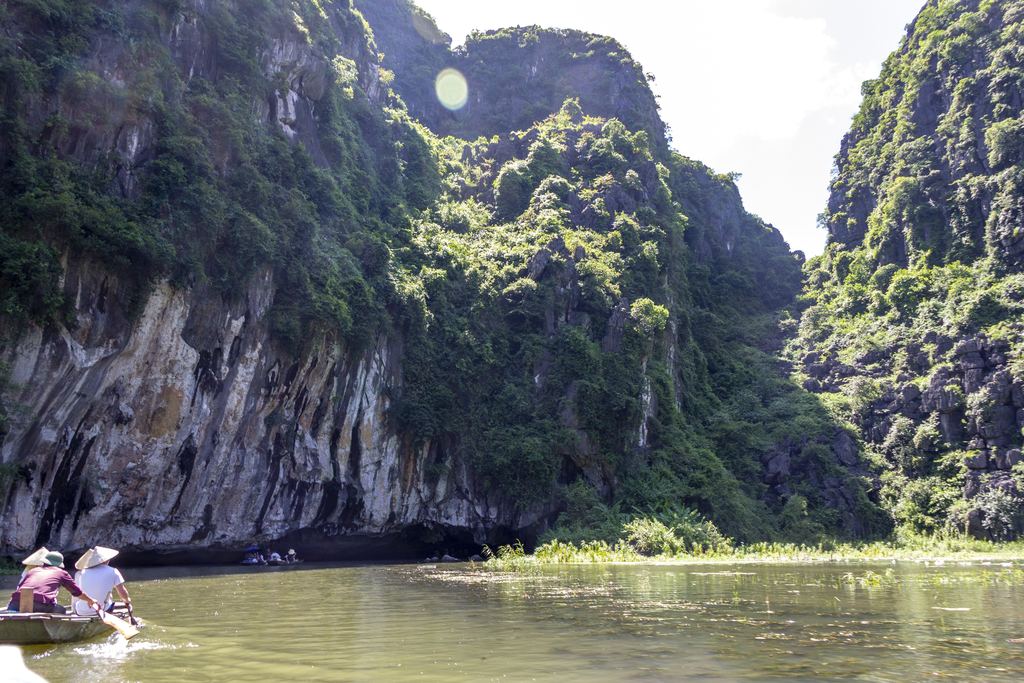
Yes. Wikipedia, read on 3 November 2026, says the World Heritage Committee inscribed the Tràng An Scenic Landscape Complex on 23 June 2014 at its 38th session in Doha, and lists the complex as inscribed under cultural and natural criteria. The complex includes Hoa Lư and Tam Cốc/Bích Động, so the two boat areas visitors know belong to one property. The Tràng An wharf, per the same page, is 3 km south of the Hoa Lư ancient capital.
Tuoi Tre's 2019 report describes Tràng An as recognised for mixed cultural and natural values, and that phrase explains the demolition better than any quote. A film village is a story about a place that never existed. A World Heritage property is a claim about a place that did. The two cannot share a ticket for long.
What can you see at Tràng An and Tam Cốc instead?
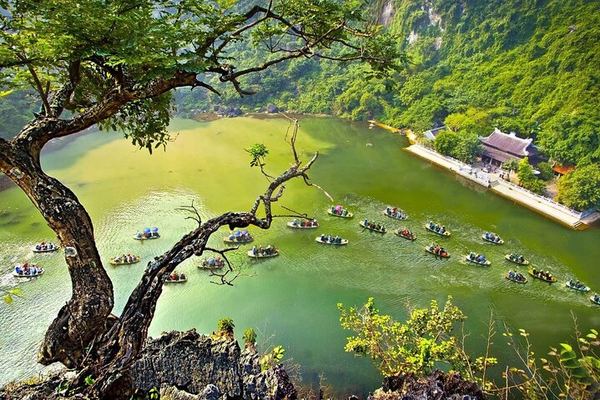
The limestone scenery the film was shot in. Wikipedia describes Tràng An as renowned for its boat cave tours, and the film's Wikipedia page lists Tràng An and Tam Cốc among the filming locations. What you will not find is the village: the 2019 report says it was dismantled.

Two practical points follow from the sources. First, Tràng An and Tam Cốc are different boat areas inside one property, and several listings let you choose between them at booking, so check which one your booking says before you arrive. Second, a boat ticket buys a boat ride in a place where a film was shot. It no longer includes a stop at the set.
For choosing between a plain boat ticket and a bundled day trip, our guide to official tickets and guided tours sets out what each costs you in time and money, and how to choose a cave tour covers the six decisions in order. Boat days depend on the weather, so read caves in the rainy season before you pick dates. If you want to compare other trips that run on water, water caves by boat, swimming or tube lists what is rowed, what is swum and what is not allowed.

How do you check a Kong filming-location claim yourself?
Four questions settle most of them, and each takes a minute:
- Does the page give a date? The set stood from 15 April 2017 to September 2019. A page that promises a visit and carries no date, or a date before 2019, describes something that is gone.
- Does it say what you will see, or only where the film was shot? Filmed here is a statement about 2015 and 2016. A boat ticket sells a boat ride.
- Does it name a place from Wikipedia's list: Tràng An, Vân Long, Tam Cốc, Hạ Long Bay or the entrance of Tú Làn? A claim about any other place needs a source of its own.
- Does the operator's own page, not a reseller's summary, mention a film set? If it does, ask in writing what the stop is.
We did not open the operators' pages for this article and make no statement about what any of them says. The questions are for you.
Caves Travel Editorial earns a commission when you book through links on this page. It does not change the price you pay. See our editorial policy.
Boat tours at Tràng An and Tam Cốc
Day trips from Hanoi that include a rowing boat at Tràng An or Tam Cốc. Check the booking page for which one you hold.
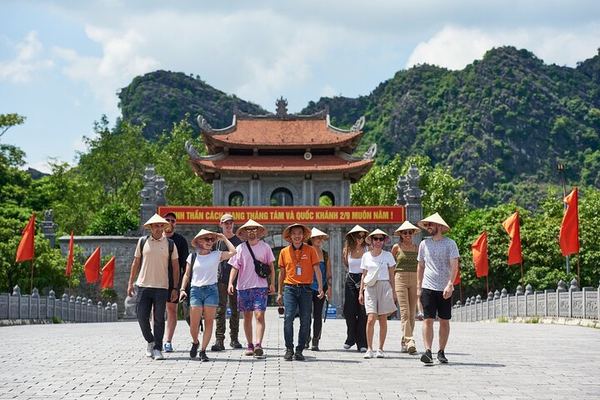
Shuttle Bus Day Trip From Hanoi: Hoa Lu by Bike, Trang An Boat and Mua Cave
A shuttle bus with designated pickup points, lunch at 11:45 and Mua Cave at 16:00, plus entrance fees, a guide and a bottle of water for each guest on board.
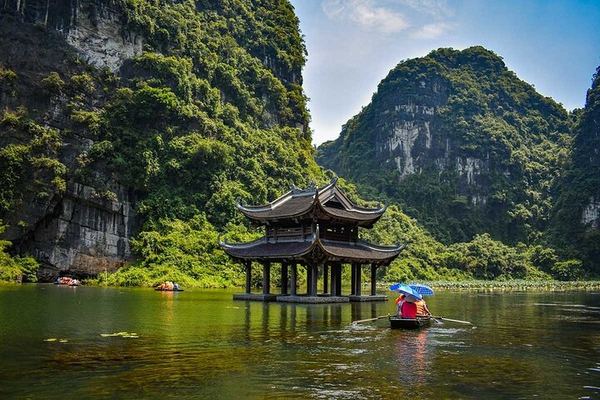
Hoa Lu, Trang An or Tam Coc Boat and Mua Cave Day Tour by Limousine
A limousine bus for up to 22 travelers, with Hoa Lu and Mua Cave entry fees, a boat on either river and a buffet lunch with a vegetarian choice included.

Trang An Boat Through Light, Dark and Cooking Wine Caves, Bai Dinh and Mua Cave
A goat-meat buffet with vegetarian dishes, a 2-hour Trang An boat through the Light, Dark and Cooking Wine caves, and a shuttle bus to and from Hanoi.
Trang An Boat, Hoa Lu and Mua Cave Day Tour With Cycling and Vehicle Choice
Choose a shuttle bus, limousine or Premium Dcar for this guided day trip, with a goat-meat buffet lunch and a sampan that seats four people in each boat.
Ratings collected by Viator and Tripadvisor
Kong: Skull Island in Vietnam: questions people ask
Where was Kong: Skull Island filmed in Vietnam?
Wikipedia, read on 3 November 2026, lists Tràng An, Vân Long and Tam Cốc in Ninh Bình, Hạ Long Bay in Quảng Ninh, and the entrance of the Tú Làn cave system in Quảng Bình. Tuoi Tre wrote on 16 April 2017 that up to 70 percent of the film's running time was shot in the provinces of Quảng Bình, Quảng Ninh and Ninh Bình.
Can you visit the Kong: Skull Island film set in Ninh Bình?
No. The set opened to the public free of charge on 15 April 2017 inside the Tràng An complex, and Tuoi Tre reported on 21 September 2019 that authorities had begun dismantling it as UNESCO recommended. What remains to visit is the Tràng An and Tam Cốc scenery by boat. Treat any page that promises the village as out of date and ask the operator before you book.
Why was the Kong film set removed from Tràng An?
According to Tuoi Tre on 21 September 2019, UNESCO suggested that the set could lead to a misconception that the imaginary tribal village was native to Tràng An. Bui Van Manh, deputy director of the provincial tourism department, gave that reason. The report also says a visit to the set was removed from the itineraries of some boat tours.
Is Tràng An a UNESCO World Heritage Site?
Yes. Wikipedia, read on 3 November 2026, says the World Heritage Committee inscribed the Tràng An Scenic Landscape Complex on 23 June 2014 at its 38th session in Doha, under cultural and natural criteria. The complex includes Hoa Lư and Tam Cốc/Bích Động. We could not open the UNESCO page itself on that date, so check the inscription on whc.unesco.org if you need the exact criteria.
Was all of Kong: Skull Island filmed in Vietnam?
No. Wikipedia says principal photography began on 19 October 2015 in Hawaii and at locations around Vietnam, and ended on 18 March 2016. Tuoi Tre says up to 70 percent of the running time was shot in three Vietnamese provinces, which leaves the rest elsewhere. The figure is Tuoi Tre's.
How big was the Kong set at Tràng An?
It depends on the report. Tuoi Tre wrote on 16 April 2017, quoting the complex's management, that the village spanned ten hectares and had 36 conical huts and over 50 role-playing villagers. On 21 September 2019 the same outlet wrote of 40 tents of rattan and bamboo. Neither report explains the difference, and the set no longer exists.
How we checked this
Both Tuoi Tre reports were downloaded on 3 November 2026 and read as raw page text, and the quotes above were matched against that text. The Wikipedia pages were read on the same day. Wikipedia is a second-level source, and it is the only place we found the filming dates and the Tràng An inscription date. The UNESCO World Heritage pages and data portal did not open from our side on 3 November 2026: the main site answered 403, so nothing here is attributed to UNESCO directly. Everything UNESCO is said to have recommended comes from Tuoi Tre's account.
- Tuoi Tre, 16 April 2017: the set opens, ten hectares, 36 huts, provinces of filming
- Tuoi Tre, 21 September 2019: the set is dismantled, UNESCO's recommendation
- Wikipedia, Kong: Skull Island: filming dates and locations
- Wikipedia, Tràng An Scenic Landscape Complex: inscription date, location of the wharf
- Wikipedia, Tam Cốc-Bích Động: part of the Tràng An complex
Data verified on . Two Tuoi Tre reports and three Wikipedia pages, read on 3 November 2026. UNESCO pages returned 403 and are not cited. Editorial Policy
Caves Travel Editorial earns a commission when you book through links on this page. It does not change the price you pay. See our editorial policy.
Planning a boat day in Ninh Bình?
The destination page lists the Tràng An and Tam Cốc boat tours, with what each one includes.