
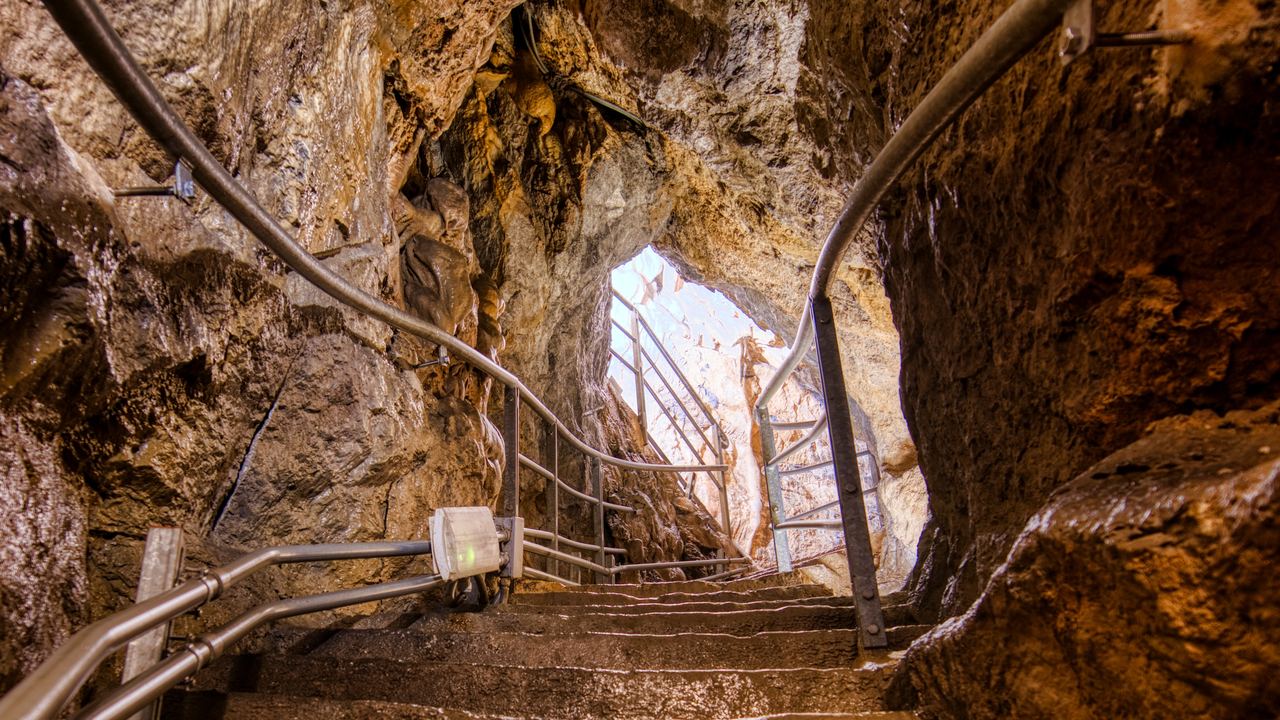
Many listings write "accessible" and stop. The Postojna Cave Park in Slovenia writes a number. The path through the cave has a non-slip concrete surface and no steps, and also a stretch about 200 metres long that climbs about 40 metres, a 20% incline, followed by a similar descent. That is a wheelchair-accessible cave, according to its own operator, and it still has a hill in the middle. The answer to "is it accessible?" is a measurement, and few of the sites we read publish one.
Naples is the opposite case. The operator of its underground route says the site has stairs and narrow passages and is not accessible to wheelchairs or walkers. Both answers are useful, because both are specific. The rest of this page is about how to get specific answers from the places you want to visit. We can't certify any tour. Parks and operators can, and every rule here was read on an official page on 19 October 2026, so treat each as an example and check the site before you go.
What does "accessible" mean underground?
In a cave the word covers five different barriers, and a site can clear four of them and fail the fifth. Steps: how many, in how many flights, with or without handrails. Slope: a ramp with a gradient is a different problem from a staircase. Surface: wet, uneven, slippery or loose. Width: the limit on a wheelchair or a pushchair, and whether two people can pass. And how you get in: lift, train, boat, ladder or your own legs.
| Access type | Typical obstacle | Official example |
|---|---|---|
| Lift or train serves the route | Waiting; width limits; only part of the cave | Wind Cave's Accessible Tour: half an hour, by elevator from a building about 200 yards south of the visitor center. Ruakuri Cave: wheelchairs and pushchairs up to 65 cm wide. |
| Walkway with a slope | Gradient, not steps | Postojna: no steps, but about 200 m rising about 40 m, then a similar descent. |
| Stairs only | Count and flights; breathing | Wind Cave: two to eight flights climbed in succession. Paris: 131 steps down and 112 up. Naples: 136 steps down. Jewel Cave: over 700 steps. |
| Boat entry | Transfers; lying back; sea state | Blue Grotto: a rowboat through an arch about a metre high. Anacapri says the site is reached by rowboat. |
| Wild cave | Ladders, squeezes, water | Jewel Cave's Wild Caving Tour requires boots and a gap check. Neither park describes its wild tours as accessible. |

Postojna: accessible, with a hill in it
The Slovenian operator's page spells out what its path offers. The cave path is 1.2 kilometres long, has no steps, and has a non-slip concrete surface. Visitors who need a wheelchair, or help from a person tending to them, are advised to tour only the part reached by the cave train. They are welcome on the whole path if a companion can help them over the sloping section. Wheelchair users must give notice at least two days in advance, and the page says that is mandatory.
The same page covers the rest of the park. The Expo Cave Karst exhibition building is adapted to wheelchairs. The Vivarium is accessible. Predjama Castle, which belongs to the same park, is not suitable for wheelchair users, because of its many steps. That is what a good accessibility page looks like: it says yes, it says no, and it gives a figure. See our Postojna tours and the how long a cave tour takes guide for the time involved.
Which cave tours say no in writing?
Paris says it plainly. The catacombs' visitor page states that the site is not accessible to wheelchair users and others who need step-free access, and does not recommend the visit for people with a motor disability or with cardiac or respiratory insufficiency. The useful information page lists 131 steps down and 112 up, an uneven and slippery floor, narrow passageways and dim light.
In Naples, the FAQ of the underground route says the site has stairs and narrow passages and is not accessible to wheelchairs or walkers. It asks guests with disabilities to contact the operator before the visit, so that it can give personalised information. In New Zealand, the Waitomo Glowworm Cave says it is accessible to those with reasonable mobility, with good handrails and paths, notes that some areas can be wet and slippery, and says it has no wheelchair access. Its neighbour, the Ruakuri Cave, says it is fully wheelchair and pushchair accessible, within a 65 cm width, and asks wheelchair users to contact it before the visit. Two caves a short drive apart gave opposite answers, and both say so.
It is worth reading a refusal as a service. A site that writes "not accessible" has saved you a trip. The problem is the site that writes nothing, because then the first time you hear about the stairs is on the stairs.
A flat "not accessible" on an official page is the most useful sentence in this whole subject.
Where can a wheelchair go underground?
Fewer places than the word "show cave" suggests, and more than most people assume. Wind Cave National Park in South Dakota runs a half-hour Accessible Tour for visitors with limited mobility, and says special arrangements exist for limited vision and hearing. The park page says the tour covers limited areas of the cave, shows the boxwork formations, and includes riding the elevator into and out of the cave. Every other tour at the park involves stairs, and the tour safety page calls all tours moderate to very strenuous. Postojna offers the cave train and the concrete path. Ruakuri offers a wheelchair route. At Wieliczka in Poland, the operator's Polish page says part of the workings on the mine's second level is adapted for people with motor disabilities. Visits need a reservation by email, and they run at set times, so we won't print them.
All four examples come with conditions: a notice period, a reservation, a part of the cave and not the whole. The shape repeats. Accessible tours are usually a reduced tour, arranged ahead, and the booking page for the standard tour may not say so. Check our Wieliczka tours for the destination, and are cave tours safe? for the wider risks.

What if you can walk, but not climb?
Many visitors with limited mobility are not wheelchair users. They have a knee, a hip, a heart, a stick. For them the question is stairs, and the number of steps matters less than the way out. Wieliczka's tourist route, according to the operator's Polish page, starts with 380 wooden steps down, visits about 20 chambers reaching the third level at 135 metres, and returns to the surface by lift. That is a downhill staircase and an easy exit. Paris is the reverse: 131 steps down, 112 steps up, and no lift mentioned on the official pages. If the exit is uphill, ask whether there is another.
The Škocjan Caves in Slovenia build the option into the route. The guided tour page describes 5 km and about 1,000 steps, and an early exit after 3 km and 500 to 800 steps if the full route is too hard. At Paradise Cave in Vietnam, the park page says visitors can walk or ride an electric buggy along a 1.6 km forest path, then it is a 500 m trek to the entrance, followed by 1 km on a wooden walkway inside. A buggy takes care of the forest path. It does not take care of the trek that follows. We did not find a page that describes that trek in steps.
Boat caves and the step you can't see
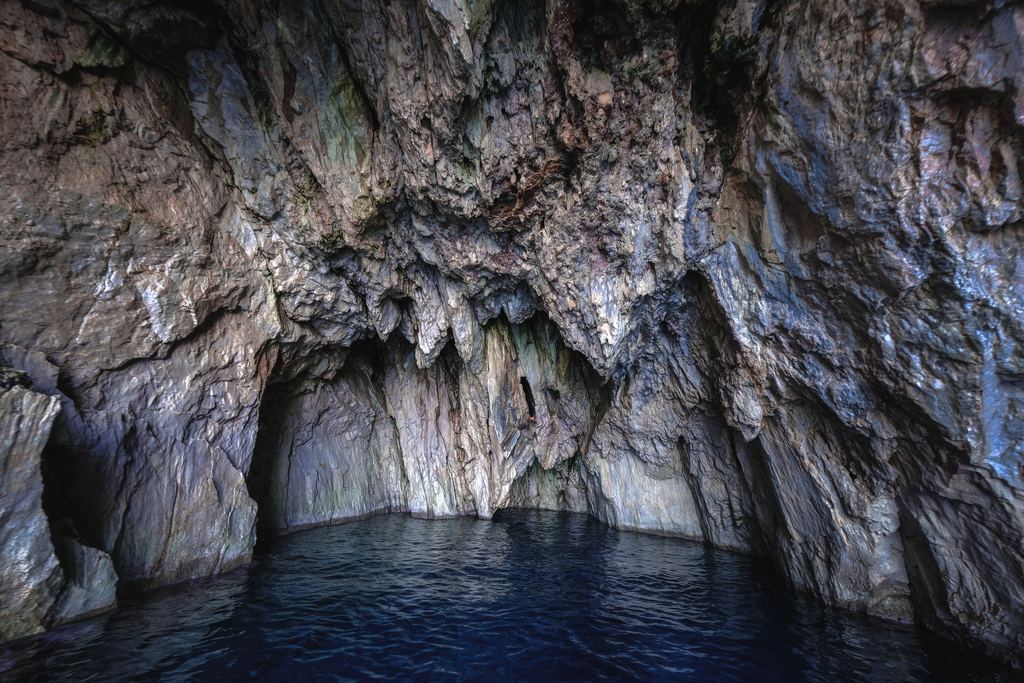
Sea caves move the barrier to the boat. The Comune di Anacapri says the Blue Grotto is reached by rowboat. Capri.com, a site run by local operators that also sells tickets, says that visitors leave their tour boat for a small rowboat that holds up to four, that the skipper has them lie back along the bottom, and that visitors who arrive by bus take stairs down to the sea. The mouth is about a metre high. We found no official statement about passengers who use a wheelchair or can't lie back, so we won't guess.
The same goes for the Benagil cave in the Algarve. We found no official statement on access for limited mobility there. The transfer from boat to cave is the part to ask about. See sea caves compared, Capri and Benagil.
Which sites warn about breathing and heart conditions?
Two of the sites we read use almost the same sentence. Wind Cave says tours are not recommended for anyone with claustrophobia, heart or respiratory conditions, recent surgeries or illnesses, or other physical limitations. Paris does not recommend its visit for people with cardiac or respiratory insufficiency. The Škocjan Caves state an air humidity of 80 to 100 per cent and a temperature of 12 °C in dry areas. The National Park Service says relative humidity in caves is usually close to 100 per cent once you are past the entrance. We are not doctors, and none of this is medical advice. It is what the sites themselves print, and your own doctor should read it before you do.
Cold matters here too, because standing in 9 to 18 °C air for an hour is not the same as walking in it. Jewel Cave states 49 °F (9 °C), Postojna 10 °C, Wind Cave 54 °F (12 °C), Paris 14 °C and Wieliczka 16 to 18 °C on its tourist route. These are the operators' own figures. They are one reason an accessible tour can still be hard on a body that can't keep warm by moving.
What about vision and hearing?
Paris has the most surprising rule. Guide dogs for blind visitors are allowed, in addition to an accompanying person, but white canes are prohibited, and visitors with a sight disability must be accompanied. The ban on touching the bones and the walls applies to everyone, blind visitors included. Wieliczka's Polish page says an assistance dog or a guide for blind and low-vision visitors may enter. Wind Cave asks for at least two weeks of notice to arrange sign-language programming. None of these is a rule you would guess, which is the argument for asking.
How should you ask?
In writing, and with numbers. A phone call is quicker, but an email gives you a sentence you can show at the door. The list below is the one we would use.
- Steps: how many in total, how many in a row, and are there handrails on both sides?
- Slope: is there any gradient steeper than a normal ramp, and how long?
- Width: what is the widest wheelchair or pushchair the route allows?
- Exit: is the way out the same as the way in, or is there a lift or shorter route?
- Companion: can someone help me on the hard section, and do they pay the same?
- Notice: how far ahead must I tell you, and is a reservation required?
Lead times are part of the answer. Postojna asks wheelchair users for two days. Wind Cave asks for two weeks for sign-language arrangements. Wieliczka needs a reservation by email. Waitomo asks wheelchair users to get in touch. The booking page for a standard tour may not tell you any of that. Our cave tours with kids guide runs the same logic for strollers, and claustrophobia in caves for narrow passages. For the first decision, see how to choose a cave tour.
Limited mobility and caves: short answers
Are there wheelchair accessible caves?
Yes, in parts. Postojna offers a stepless path with a 20% slope and a train. Wind Cave runs an Accessible Tour by elevator. Ruakuri Cave says it is wheelchair and pushchair accessible. All require checking and, often, notice.
Is the Blue Grotto accessible?
The Comune di Anacapri says it is reached by rowboat. The arch is about a metre high and visitors lie back. We found no official statement for wheelchair users, so ask before you book.
Can I visit a cave with a walking stick?
It depends on the steps and the surface. Paris lists 243 steps in total and a slippery floor. Waitomo's Glowworm Cave says good handrails and paths, with wet and slippery areas. Ask for the step count and the handrail details.
Do I need to book ahead if I use a wheelchair?
Usually yes. Postojna requires two days of notice and Wieliczka requires a reservation for its adapted route. Treat notice as part of the booking, and ask in writing.
Can a companion come with me?
Often, and sometimes as a requirement. Postojna says a wheelchair user doing the whole path needs a person who can help on the slope. Paris requires sight-disabled visitors to be accompanied.
If you book a tour through links on this site, Caves Travel earns a commission at no extra cost to you. Most listings do not say whether a tour has steps, so use the questions above before you pay, and read the description for the word "stairs".
Data verified on . Official pages read 19 Oct 2026: Postojna, Wind Cave, Paris, Napoli Sotterranea, Waitomo (2), Wieliczka (Polish), Skocjan, Paradise Cave, Anacapri. Reconfirm before you go.
Check an adapted route before you book
Wieliczka's Polish page says part of its second level is adapted for people with motor disabilities, with a reservation required.