
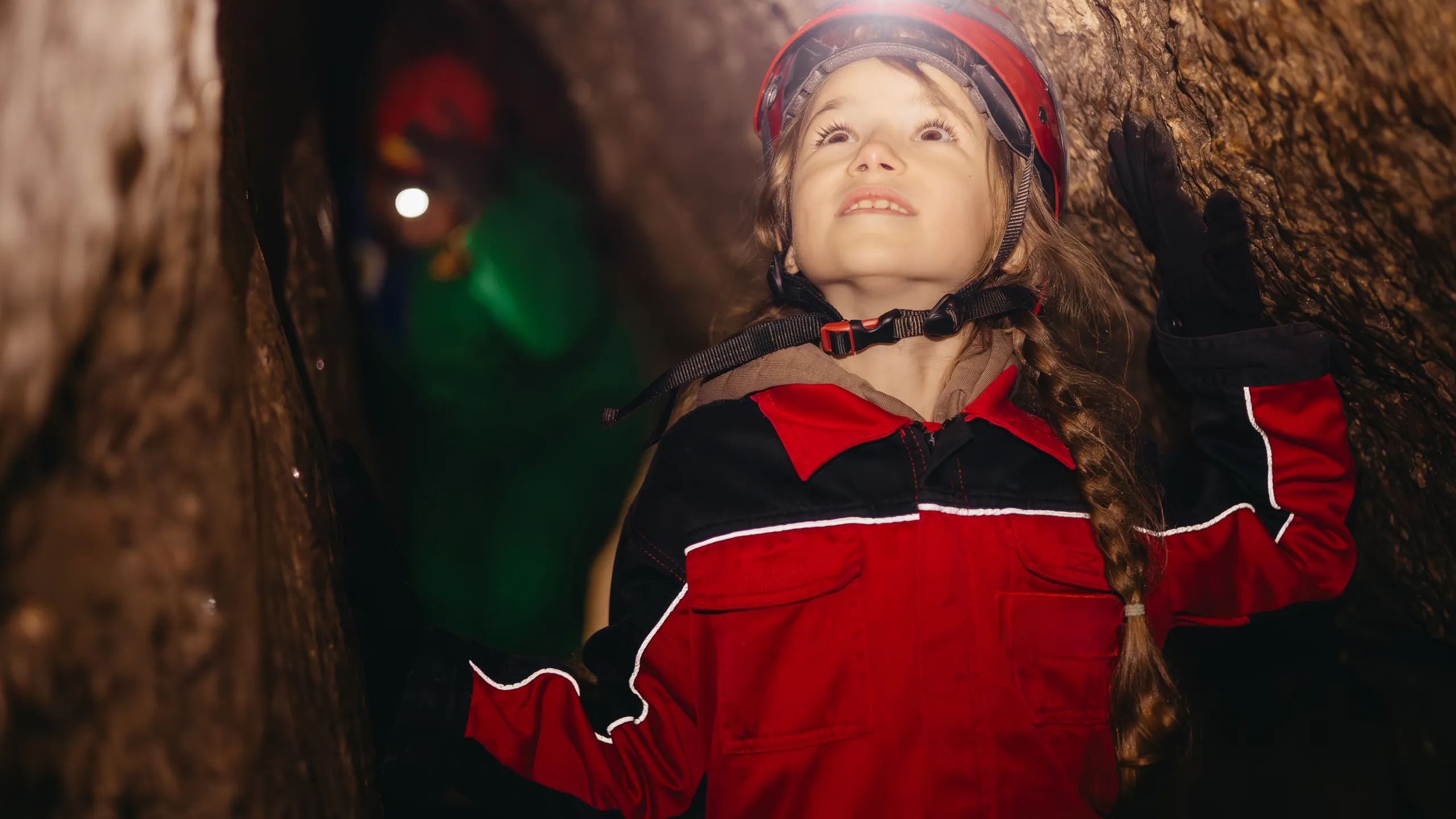
Three caves, three answers. Penn's Cave in Pennsylvania says it has no minimum age limit. The Postojna Cave Park in Slovenia says children aged 14 and under can visit only with an adult. The Department of Conservation in New Zealand says its Clifden Caves are suitable for fit and agile adults and children aged 12 and older. All three are caves, and all three are right, because they describe different caves.
That is the first thing to know about taking kids underground. The age on the listing is a summary of something else: stairs, water, cold, a boat, a rule about silence. Read the reason and you can judge your own child. Read only the number and you will either rule out a tour that would have been fine or sign up for one that wasn't. Every rule below was read on an official page on 19 October 2026. Rules change, so treat each one as an example of a kind of rule and check the site before you go.
Why do age limits differ so much between caves?
We found four causes behind the numbers, and they don't mix. A site that has one often has none of the others.
- The body. Stairs, steps and distance. The Škocjan Caves in Slovenia describe a route of 5 km and about 1,000 steps, with an exit at 3 km. Wieliczka's tourist route starts with 380 wooden steps down. Jewel Cave in South Dakota says its Scenic Tour climbs and descends over 700 stair steps.
- The water. Boats, rivers and flash floods. The Clifden Caves warn that the system is subject to flash flooding and should not be entered during or right after heavy rain.
- The group. Silence, darkness, a fixed pace. In Naples the operator says it does not give candles to children.
- The equipment. Strollers, carriers, helmets. This one is the easiest to miss.
The table runs the same logic by age band. It describes what a tour demands of a child, from official pages, and does not tell you what your child can do. You know that part.
Ask for the reason behind an age limit. It is usually a staircase, a boat, or a stroller rule, and each one you can check.
| Child | What the tour asks of them | Examples from official pages |
|---|---|---|
| Babies and toddlers, carried | No stroller; a carrier or a lap; cool air | Paris bans strollers and says to use a baby carrier. Wind Cave allows front packs but not baby backpacks. Postojna lets a folded stroller ride the cave train. |
| About 3 to 6 | Walk 1 km or more, take stairs, stay with the group in the dark | Paris: 131 steps down and 112 up. Postojna: 14 and under need an adult. Naples: candles are not handed to children. |
| About 7 to 11 | Stamina for several kilometres and long stair runs; follow rules | Škocjan: about 5 km and 1,000 steps, early exit at 3 km. Jewel Cave Scenic Tour: over 700 steps. |
| 12 and older | Wild or adventure routes begin to be offered | Clifden Caves: fit and agile adults and children 12 and older, with helmet and two torches advised. |

Strollers and carriers: the rule that changes most
Stroller policies are the thing most likely to differ from what you assumed. The Paris Catacombs' visitor page says strollers are not allowed and asks parents to use a baby carrier. At Wind Cave, the park page bans baby backpacks but allows front packs. Penn's Cave does not allow carriers or strollers beyond the visitors center exit, and suggests parents carry infants or hold them on their laps. Wieliczka's operator, on the Polish page we read, has no age limit and still advises against taking strollers underground because of the number of steps.
The Postojna Cave Park is the generous example. It welcomes babies in prams, says the paths and ramps suit strollers up to 80 cm wide, and says a folded stroller can ride the cave train. In New Zealand, the Ruakuri Cave says it is pushchair accessible up to 65 cm wide, while the Waitomo Glowworm Cave says it has no wheelchair access and calls for reasonable mobility. Check both when you plan; see our limited mobility guide for the same logic applied to wheelchairs.
What does a child have to do on a cave tour?
Strip the rules away and a tour asks a child for five things. The list is our reading of the official pages, not an official list.
- Walk and climb at the group's speed. Postojna says children 14 and under need an adult, and Paris says the same for under-14s.
- Stand still. Guides stop at formations to explain them, and a group of 15 stops with them.
- Handle the dark. Naples requires school groups to bring a small torch, and does not hand candles to children.
- Stay cold without complaint. More on that in a moment.
- Keep their hands to themselves. Wind Cave asks visitors not to touch the cave, and Paris says the bones must not be touched.
How cold is it for a child, and what should they wear?
Cold is the detail families forget. Jewel Cave states 49 °F (9 °C) year round and asks for fully enclosed shoes on every tour. Postojna states a constant 10 °C on its official pages. Wind Cave says 54 °F (12 °C) and recommends a light jacket. The Škocjan park tells visitors to bring clothing despite high summer temperatures, because the caves are 12 °C. Wieliczka states 16 to 18 °C on its tourist route, and Paris says 14 °C. These are the operators' own figures, and we have not measured them. For the physics, see why caves are cool inside, and for what to put on a child, our what to wear on a cave tour page.
We did not find an official cave page that says children feel the cold more, so we won't claim it. The practical answer is cheap anyway: one more layer than you think, and a hat if the site allows it. Wind Cave notes that there are no restrooms in the cave. The Paris site puts its restrooms at the entrance and at the exit. If your child needs one every 20 minutes, those two facts are the plan.

Boats, rivers and ladders: the water and the climb
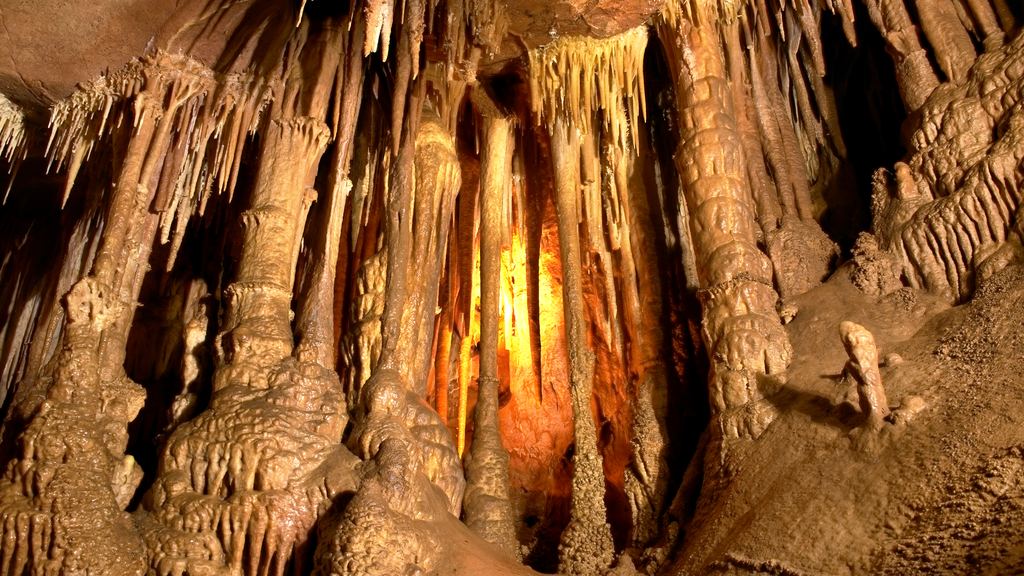
Water changes the age question. Penn's Cave runs its tour by boat. It says life jackets are on the boats but not required to be worn, and it also lets visitors bring their own, including infant sizes. The Clifden Caves are the opposite case: a wild cave, rough underfoot, with slippery surfaces, loose rocks and low ceilings, with a helmet recommended and two torches per person. The DOC page says the caves are suitable for children aged 12 and older who are fit and agile, and warns against entering after heavy rain.
The rain point matters for planning more than it seems. A flooded cave closes, and a family that booked a day around it has to start again. We cover the logic in if your cave tour is canceled and the risks in are cave tours safe?
When is a cave tour a poor choice for a child?
The uncomfortable case is a day built around a very short visit. Capri.com, a site run by local operators that also sells tickets, says waiting times to enter the Blue Grotto can easily exceed an hour, that the visit inside lasts five minutes, and that in "island tour plus Blue Grotto stop" packages the stop at the grotto is almost never made because of the queues. The same page advises preparing children for the dark, narrow entrance, which is an arch about a metre high that visitors enter lying back in a rowboat. For a three-year-old, that can be a long hour for a very short moment.
If the cave is the shortest part of the day, ask what fills the rest of it.
The other poor fit is the one built on a squeeze. Wild caving tours at Jewel Cave and elsewhere are written for people who can pass through a gap about 8.5 inches high, which is no place to assume a young child will be happy, even if they fit. Our claustrophobia page explains how to read for tight passages, and the types of cave tours page sorts show caves from wild ones.
What changes at 12 and older?
The choice widens, though not because a 12-year-old is an adult. It widens because operators start offering routes with equipment. The Clifden Caves set 12 as the age from which fit and agile children are suited. Jewel Cave's FAQ requires boots above the ankle with good traction for its Wild Caving Tour, on top of the string test for the 8.5-inch gap. Wind Cave's safety page says cameras are not permitted on its Candlelight Tour or Wild Cave Tour, and sandals are not permitted on either. None of these rules is about age. They are about gear, fitness and a gap, and a teenager who dislikes tight spaces is a poor fit at any age. Ask the operator for the minimum on the specific route, not on the cave.
Which questions should you ask before you book?
- What is the minimum age, who enforces it at the door, and does a child need an adult for the whole route?
- How many steps, and are there stretches where an adult can't carry a child?
- Can we bring a stroller, a carrier, or neither? What happens to the stroller during the tour?
- How long does the group stand still, and is there a seat?
- Is there a toilet before and after, and can we leave halfway?
- How much of the day is in the cave itself?
That last question takes the most honest answer. A guide at the Postojna Cave Park can tell you how long the tour is in the cave and how long is the train. A boat operator in Capri can tell you how long you queue. The Wieliczka salt mine gives its route as 2 to 3 hours on its Polish page, starting with the steps. Waitomo gives 45 minutes for the Glowworm Cave on its official page and two hours for Ruakuri. We have not compared them against your family; you will have to do that.
Caves with kids: short answers
What is the minimum age for a cave tour?
There isn't one rule. Some sites set none, such as Penn's Cave and Wieliczka. Postojna wants an adult with every child aged 14 and under. Clifden says children 12 and older. Adventure tours often set higher limits. Check each site, and ask what the age is based on.
Can I take a stroller into a cave?
Often not. Paris and Penn's Cave do not allow strollers on the route, and Wieliczka advises against them. Postojna accepts prams and lets a folded one ride the cave train. Plan on a carrier unless the site says otherwise.
Will my child be scared?
Some will, some won't, and we found no official source that measures it. The dark, the quiet and a long wait before the tour are plausible triggers, so ask how long the queue is and what the tour does with the lights.
Is it too cold for a child?
The operators' figures run from about 9 to 18 °C. That is cold if you are standing still for an hour. Add one layer, and a hat where allowed, and check the specific site's figure.
If you book a tour through links on this site, Caves Travel earns a commission at no extra cost to you. We list tours by destination, so use the questions above on any listing, and read the minimum age in the description before the price.
Data verified on . Official pages read 19 Oct 2026: Penn's Cave, Postojna, Paris Catacombs, DOC Clifden, Wind Cave, Jewel Cave, Skocjan, Wieliczka (Polish), Waitomo. Rules change: check before you go.
Start with a cave that welcomes prams
Postojna says babies in prams are welcome and a folded stroller can ride the cave train, per its official families page.