
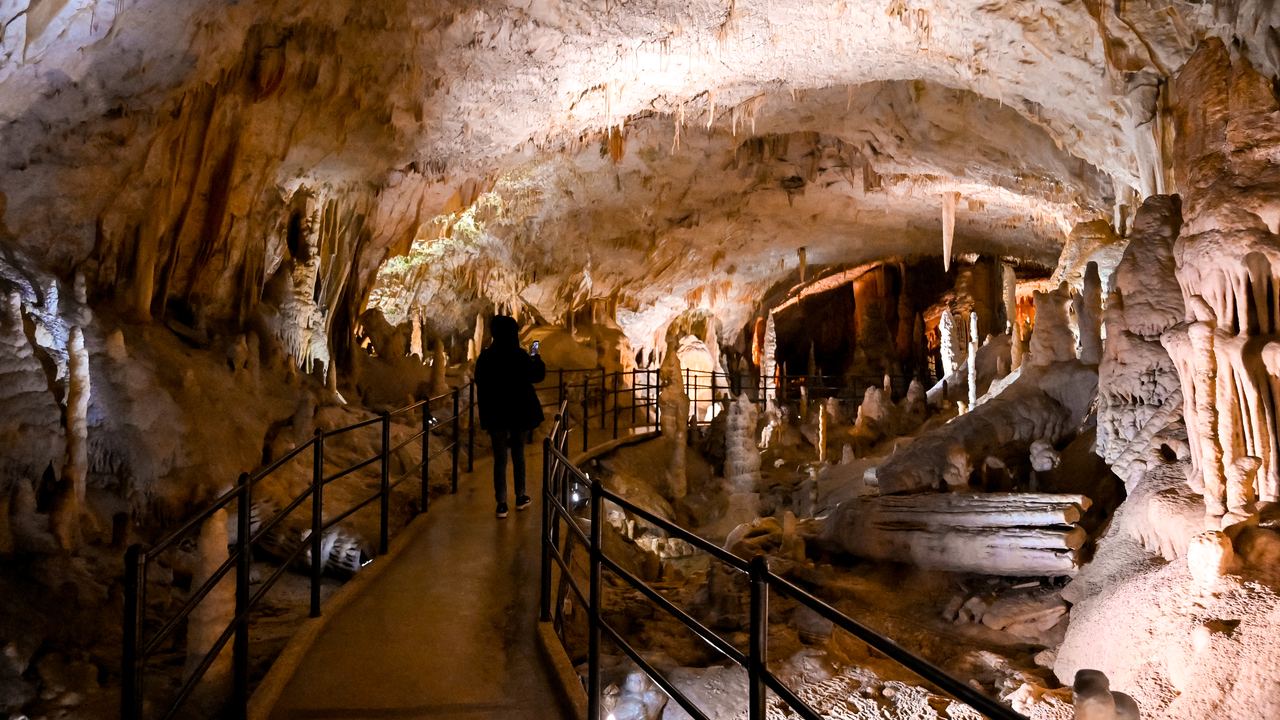
A show cave is a cave that has been made safe enough for people with no caving skills: a built path, lamps, a guide, a gate that locks. Every other kind of cave tour is a variation on how much of that is missing. The International Show Caves Association, which keeps the standard definition, says a show cave is "a natural occurring void beneath the surface of the earth that has been made accessible to the public for tours". That sentence stretches from a lit concrete path in Slovenia to a rowboat under an arch about a meter high on Capri. It will not tell you whether to bring boots.
This page sorts cave tours into six types by what they ask of the visitor, not by geology. For each: how you move, what you are handed at the start, how hard your body works, and one place on this site where you can see it. The how to choose a cave tour guide uses these types as its first decision, and the where to go section starts from the same list.
Where does a show cave end and a wild cave begin?
Not everyone likes that one-line definition. The independent catalog showcaves.com calls the plain version, a cave used for tourism, "unfortunately wrong", because it also fits canyoning and sport caving. It leans on a 1968 wording by the Austrian speleologist Hubert Trimmel instead: suitable caves are made accessible to larger numbers of visitors, and the work that takes is called cave development. Its own sorting rule is more useful to a traveler. It splits tourist caves into developed show caves and what it calls semi-wild caves, and puts the border where above-average fitness is required or where an accident is a real risk. That border is the one this page uses.
Postojna Cave in Slovenia sits well on the developed side. The cave's own site gives the system as 24 kilometers long, but the standard tour covers about 5 of them in around an hour and a half, mostly by underground train, with just over a kilometer on foot over slip-resistant concrete. You are asked to arrive 30 minutes before the departure. The same page says the more hidden parts of the system are reached on adventure tours, and that some of those need a good level of fitness and earlier caving experience. One cave, two products. The second is not a longer version of the first.
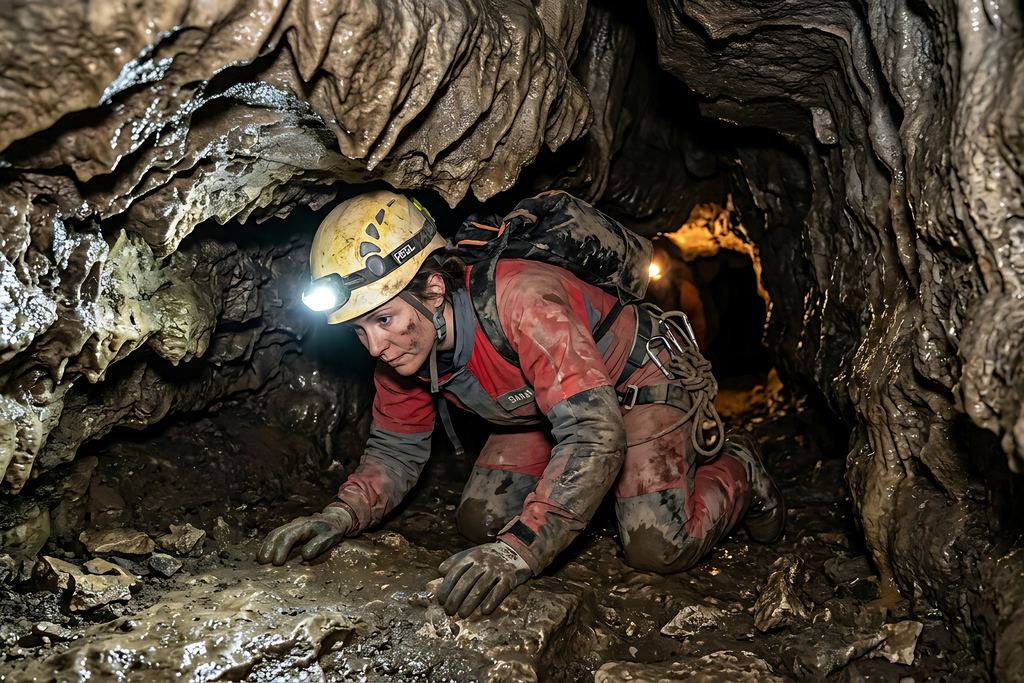
Read the equipment line before the description. A tour that issues overalls, a helmet and a safety belt is not selling a walk.
What is a wild cave tour?
Nobody has standardized the name. A US national park says wild cave tour, Postojna says adventure tour, a salt mine in Poland says miners' route. What they share is that the cave is left mostly as it is, and the visitor adapts to it.
The fullest spec sheet I found belongs to Mammoth Cave National Park in Kentucky, which is not a destination on this site but publishes every tour with its duration, distance, stairs and a difficulty label. The tours run from a self-guided half hour to a six-hour Wild Cave Tour, which the park's tour page calls an all-day adventure underground. The description says participants spend long stretches crawling through extremely tight spaces, that chest and hip measurements must not exceed 42 inches, that you bring your own lace-up boots, and that there are "no alternative routes available". I read that page on October 19, 2026; the park had last updated it in September.
Closer to our destinations, the Škocjan Caves park in Slovenia lists a guided route along the Hanke Channel that takes about three to four hours, covers 2 kilometers and 400 stairs, is closed to children under 15, and issues caving overalls, a helmet and a safety belt at the visitor center.
The uncomfortable part: on these tours the tight passage is the product. Nobody will route you around it, because it is what you paid for. Check that the listing you are reading says so as plainly as the park does. If you are not sure how you feel in a squeeze, the claustrophobia guide sorts tour formats by how closed-in they get.
Which tours enter a sea cave by boat?
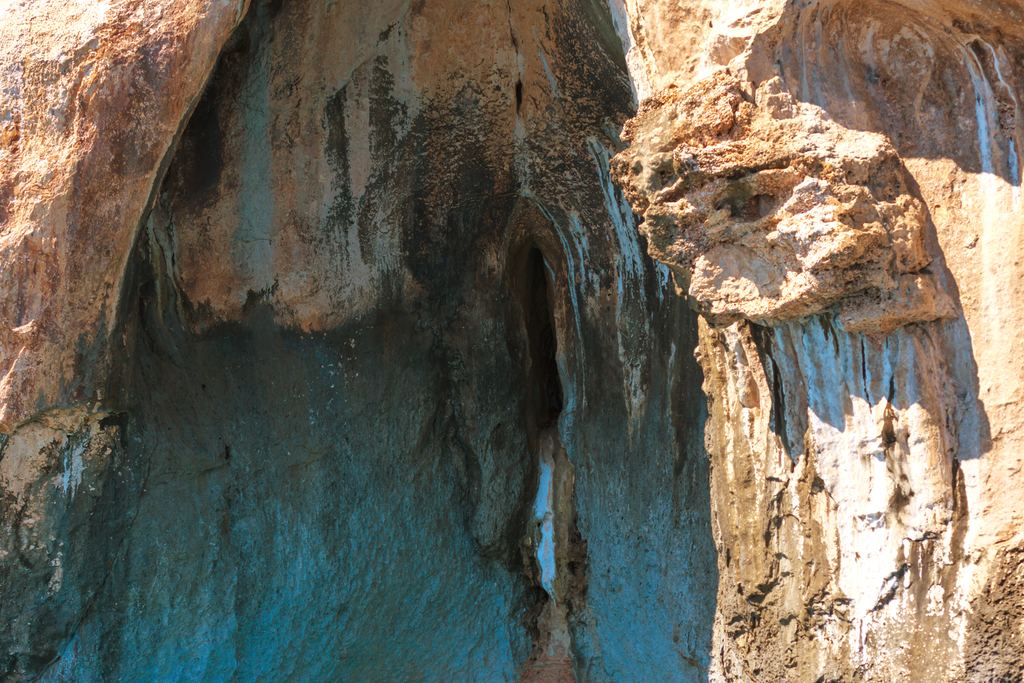
The Blue Grotto on Capri is the clearest case. Italy's Ministry of Culture says the cave can be entered only by small rowing boats, with their own ticketing that is not included in the entrance ticket, and that access is rationed: visitors without a reservation get in only if there is room against the booked numbers. The comune of Anacapri describes the visit as lying down in a rowboat and being carried under an entrance arch only about a meter high. Treccani, the Italian encyclopedia, gives the opening as 1.30 meters and the cave as 54 meters long, 30 wide and 15 high. The two sources disagree by 30 centimeters, so treat both as approximate.
A listing that says "Blue Grotto" can mean a pass by the entrance, a change into a rowboat, or a full visit. The ministry page tells you what has to be paid for to be inside: a rowboat and an entrance ticket. Check the listing against that before you compare prices.
The sea sets the schedule. The ministry says the site stays closed in adverse sea and weather conditions, and that the blue of the water and the walls changes with the hour and the weather, because it comes from sunlight filtering through the opening onto the sandy bottom. Benagil on the Algarve coast is the other cave the site sells this way. The sea caves compared page sets the two side by side, and if your cave tour is canceled covers what to do when the sea says no.
What changes when the cave has water in it?
In a dry cave your feet decide how it goes. In a wet one, your body temperature and your comfort in deep water do. Waitomo in New Zealand shows the range on one list of tours. The caves' own FAQ lists walk-through tours of 45 minutes, an hour and an hour and a half, next to two black water rafting tours of three and five hours. For the rafting you bring swimwear and a towel and the operator supplies a wetsuit. The FAQ says you must be comfortable in the water but that swimming is not a necessity, because you float on a tube. It also says photography is not permitted on the rafting tours or in the Glowworm Caves, and is allowed on two of the walking tours.
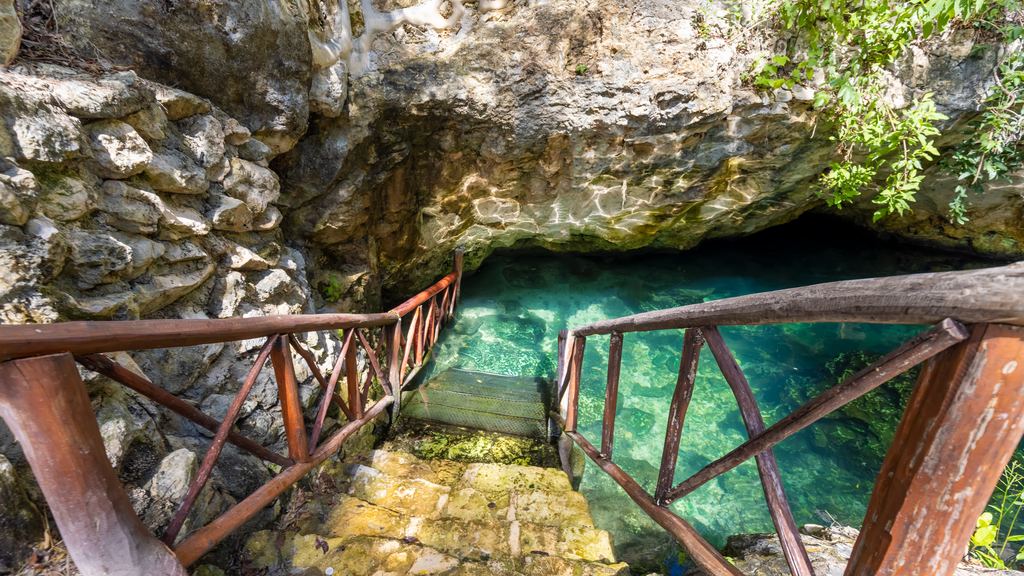
A cenote changes the question again. A 2024 paper in Microbial Ecology describes the Yucatán as a karst landscape with many natural flooded sinkholes, formed by the collapse of limestone bedrock and known locally as cenotes. A study of the aquifer's microbes adds that the water beneath is density-stratified: a freshwater lens lying over saline groundwater. For a visitor the floor is simply water. The question stops being "can I walk this?" and becomes "do I want deep water under me, with no bottom in view?" The cenotes explained page covers the geology, and the Tulum cenote tours category lists what is sold.
For the ATM Cave in Belize, the National Institute of Culture and History says the cave is 3.13 miles long and that the ancient Maya used it for rituals from the Early Classic Period, A.D. 300 to 600. That page does not describe what the tour involves, so take the conditions from the listing and ask about swimming, group size and cameras before you book. The same goes for the cave tubing and Trang An and Tam Cốc boat tours: the page on caves you visit by boat, swimming or tube compares them.

Are catacombs, mines and underground cities caves?
A cave is natural. These are not. Quarries, burial galleries, salt workings and refuges were dug by people, so the rule that matters is not what formed the space but what it was used for, because that decides the route, the rules and the pace.
Paris is the clearest example. The city's official leaflet says the ossuary was created in the late 18th century in abandoned quarries dating from the 15th century, and that it received its first bones from the Saints-Innocents cemetery, which closed in 1780. The visit is a one-way circuit of 1.5 kilometers at 14 °C. The useful information page says the visit lasts 45 minutes; another page on the same site, Please read before your visit, says to plan on an hour. It also says the exit is nearly 700 meters from the entrance, that there is no cloakroom, and that waiting outside can be long, even in winter.
Rome's catacombs are a different thing under the same word. The Pontifical Commission for Sacred Archaeology says they are, for the most part, excavated in tuff or other soil that is easy to cut yet solid. At San Callisto the visiting rules (the German version) say the catacomb can only be visited in groups of at least two people, takes about 30 to 40 minutes, and nobody may go through on their own. Naples Underground starts from Greek quarries: the operator's own site says Greeks opened them to cut tuff blocks for walls and temples, and the FAQ says the visit lasts about an hour, that the spaces are large, and that the one narrow tunnel is optional. Anyone who skips it waits around ten minutes.
Wieliczka in Poland is a salt mine, worked since the 13th century according to UNESCO. The mine's own page puts the tourist route at about two to three hours through some 20 chambers down to 135 meters, with a lift to the surface. Its miners' route is the wild-cave version: about two hours, 2 kilometers, overalls and mining gear issued, and the mine states that those workings are not adapted for visitors with reduced mobility.
Derinkuyu in Cappadocia is a refuge. UNESCO's text says people there banded together in subterranean towns such as Kaymaklı and Derinkuyu to resist invasions. The Turkish ministry of culture's museum page gives an approximate depth of 85 meters and adds that only about ten percent of the city can be visited. The district government's page is more careful: the eight floors open to visitors reach about 50 meters, and 85 is an estimate for a fully cleared city. Both are official, and they do not agree. For Cu Chi in Vietnam, the state portal vietnam.vn says the tunnel network is about 250 kilometers long and was built between 1946 and 1968. That is a celebratory figure from one source; treat it as an order of magnitude.
The page on underground cities, catacombs and mines goes through each of these in more depth. The examples here live in the categories for Paris, Rome, Naples, Wieliczka, Cappadocia and Cu Chi.

Do ice caves count as caves?
It depends on who is talking. The National Park Service uses two meanings: caves formed in ice are glacier ice caves, shaped by meltwater moving through the glacier, and caves formed in rock that hold ice all year round are called ice caves. The Icelandic tours belong to the first kind.
The regional tourism site Visit Vatnajökull explains the timing. The caves are mostly dug by meltwater in summer, when they are full of water and cannot be entered. When the flow stops in the fall and the cold hardens the ice, what is left is a cave. They are open to visitors from November and usually through March, depending on the weather, and a warm spell with wind and rain can flood them and make them impassable. The site says you always go with a certified guide, in a helmet and crampons. Guides scout new caves each fall, so the cave you see this winter is usually not the one anyone saw last winter. That is why a listing cannot promise a particular cave. The ice caves season page explains the cycle, and the Iceland Ice Cave Tours category lists the departures.

How do you tell which type a listing is selling?
Listings rarely use the words on this page. Look for what the traveler is handed and what the traveler is asked. The table sets the six types against those signals.
| Type | How you move | What the listing hands you | Body demand | Example |
|---|---|---|---|---|
| Show cave | Walk or ride on a built path | Ticket, guide, lighting | Stairs and slopes, little else | Postojna, Slovenia |
| Adventure or wild cave | Crawl, climb, scramble off the path | Overalls, helmet, headlamp, sometimes a belt | Fitness, tolerance of tight spaces | Škocjan Hanke Channel; Wieliczka miners' route (listed by the sites themselves) |
| Sea cave by boat | Sit or lie in a small boat | A boat seat, sometimes a separate entrance ticket | Almost none, but the sea can cancel it | Blue Grotto, Capri; Benagil, Algarve |
| Water cave | Swim, float, tube or raft | Wetsuit or swimwear, life vest, tube | Comfort in water, warmth | Waitomo rafting; Tulum cenotes; Belize cave tubing |
| Man-made underground | Walk a one-way route or a guided circuit | Ticket, audio guide or group guide | Stairs, damp, sometimes stooping | Paris, Rome, Naples, Wieliczka, Cappadocia, Cu Chi |
| Ice cave | Walk on ice | Helmet and crampons, certified guide | Balance on ice, cold | Iceland, winter only |
One type is missing. Lava tubes, which the National Park Service calls "probably" the second most common kind of cave, form when the surface of a lava flow cools and roofs over the molten rock below; the tunnel is left when the flow drains. The NPS page explains the process. This site does not sell a lava tube tour.
Two habits help more than any definition. First, find the duration and compare it with the type: a 45-minute walk and a five-hour crawl are not the same product, and the how long is a cave tour page lays out what each type takes. Second, check what the tour does not include: a separate entrance ticket, a separate boat, rental gear. The official ticket or guided tour page covers the money side without prices, and what to wear on a cave tour follows from the type.
The words "adventure", "explorer" and "wild" are marketing until the listing says what you crawl through, climb or swim.
Questions about cave tour types
Is a show cave the same as a tourist cave?
Mostly. According to showcaves.com, "tourist cave" is still more common in English-speaking countries, and in the US you will also see "commercial cave". "Show cave" is a translation of the German Schauhöhle, and the site says scientists, the National Speleological Society and the US National Park Service use it.
Can I do a show cave if I cannot manage stairs?
Sometimes. Postojna says its path is suitable for strollers and conditionally suitable for visitors with mobility impairments, and advises those visitors to do the tour by train only, because a classic tour includes a 200-meter path section with a 20 percent gradient. Other caves differ. The limited mobility guide explains how to ask.
Is a wild cave tour safe for a first-timer?
The sites that run them set their own entry rules, such as a minimum age, a size limit or required boots, precisely because the tour is physically demanding. Read those rules and ask about them. The are cave tours safe page explains what a careful operator does.
Do ice caves exist all year?
The Icelandic ones do not. Visit Vatnajökull says they are accessible from November and usually through March, depending on the weather. A cave in rock that holds ice all year is a different thing, as the National Park Service defines it.
caves.travel earns a commission when you book a tour through our links, at no extra cost to you. The type descriptions above come from the official pages of the caves, not from the listings, so you can check any of them.
Show cave tours in Slovenia
The classic tour at Postojna, listed by departure and language.
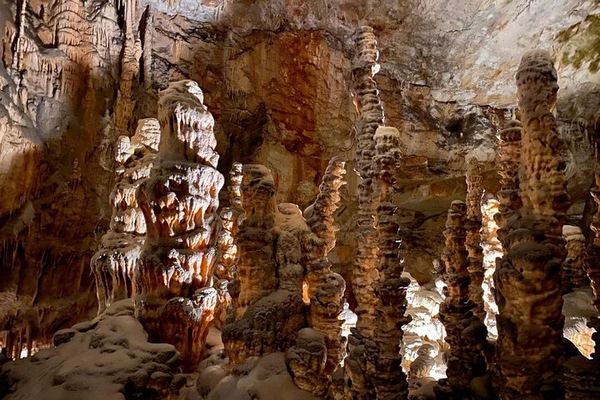
Day Trip to Postojna Cave and Predjama Castle With Water and WiFi From Ljubljana
Bottled water, WiFi and parking fees are covered on this Ljubljana trip for up to eight travelers, with entrance to the cave and castle booked separately.
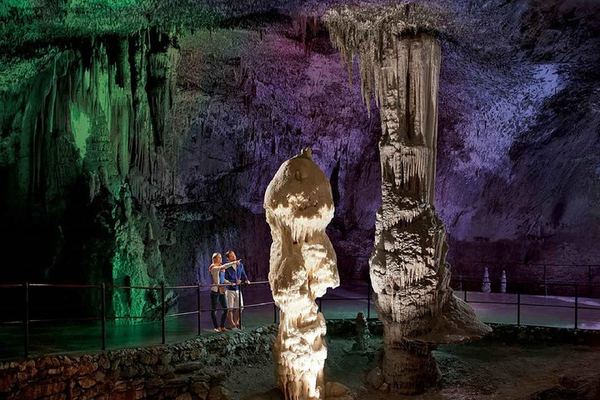
Deluxe Private Tour From Rovinj to Postojna Cave and Predjama Castle
A private driver and guide, insurance and a hotel or port pickup in Rovinj are included in this deluxe day out, with guiding in German, English or Italian.
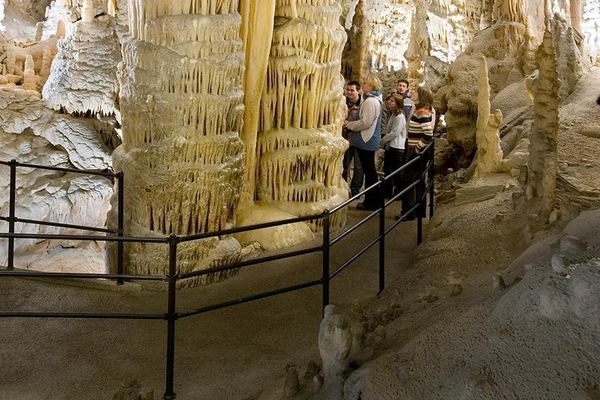
Group Tour to Postojna Cave With Cave Train and Castle Photo Stop From Koper
Meet at the ISTRANKA TOURS kiosk by the cruise terminal exit in Koper for the cave train, a licensed guide, basic insurance and a photo stop at a cave castle.
Ratings collected by Viator and Tripadvisor
Data verified on . Official pages read on 19 Oct 2026. Durations, entry rules and opening periods change: check the cave's own site before you go.
Start with a show cave
If you are new to caves, a built path is the lowest-risk way to find out if you like them.