
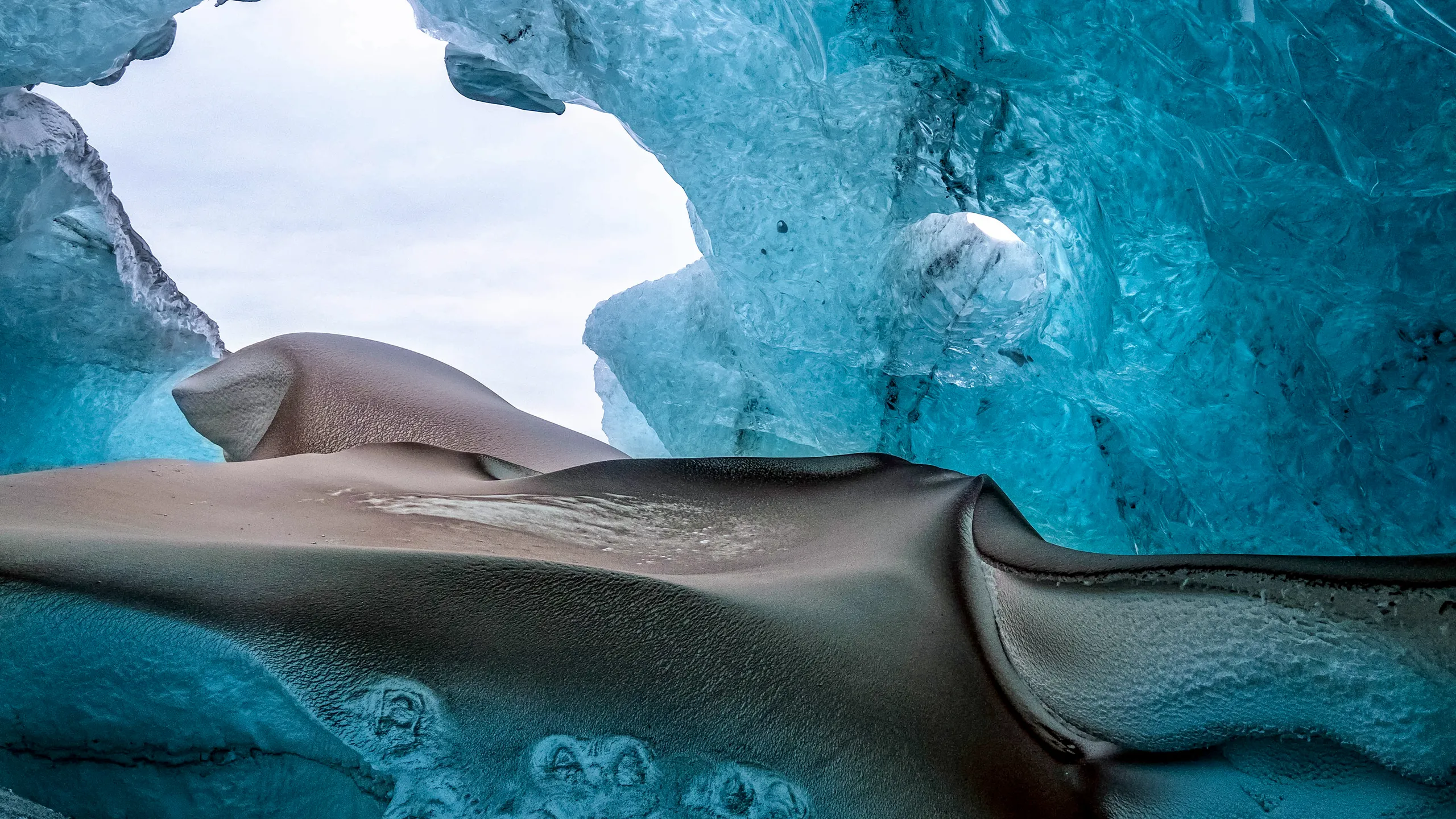
Visit Iceland, the country's official tourism site, says the ice cave season "typically extends from November until May" and "varies due to temperatures and weather conditions". Read that as a range with soft edges, because other sources draw it elsewhere. Guide to Iceland, a tour operator, says the Vatnajökull tours run from October to April. The newspaper Grapevine, reporting the national park's rules in September 2025, wrote that the caves are closed from May through September. We found no official calendar. A glacier cave is a tunnel that meltwater digs in summer, and the tunnel you can enter in November is not the one that stood there last winter.
So the useful question is not "which month" but "what kind of ice cave". Four different things share the name, and only one of them follows the pattern most guides describe. This page sorts them, explains why the glacier ones come and go, and says what that means for planning. The tours themselves, with their prices and starting points, are on the Iceland ice cave tours page, and the country overview is on the Iceland page.
What counts as an ice cave? Four things share the name
| Kind | How it forms | When you can go | Example | Ask the operator |
|---|---|---|---|---|
| Glacier ice cave | Meltwater flows through a glacier and melts out a tunnel (US National Park Service) | After the ground freezes in autumn until spring; the window varies (Visit Iceland) | Vatnajökull and Katla, Iceland | Which cave will we enter, and who decides that morning? |
| Rock cave that holds ice | Cold air sinks into the cave in winter and stays through summer (US National Park Service); spring meltwater freezes inside (Eisriesenwelt) | Whenever the cave is open; the Austrian one runs early May to 1 November | Eisriesenwelt, Austria | How cold is it inside, and how many steps? |
| Cave shaped by hot water | Geothermal water in a glacier river carves ice caves at the glacier edge (Vatnajökull National Park) | Not a tour calendar; remote, and sudden floods are a hazard | Kverkfjöll, Iceland | Is this cave visited at all? |
| Dug tunnel | Excavated in the ice cap, not a natural cave | The operator says about 0 C and not affected by seasons | Langjökull, Iceland | Is it a natural cave or a tunnel? |
The National Park Service puts the first two apart in one line: "Ice caves that form in ice are called Glacier Ice Caves", while "caves formed in rock that contain ice all year-round are referred to as Ice Caves" (NPS, Caves and Karst). The first group is the Icelandic tour product. The second is a different animal, and it is the one that stays cold in July.
Why does a glacier cave exist only part of the year?

Water digs it, cold makes it enterable
An ice cave starts as a drain. The National Park Service, writing about Root Glacier in Alaska, says the formation of an ice cave "starts when water flows into and through a glacier", melting a tunnel in the ice. Where water drops in from the surface it makes a moulin, a vertical shaft that is out of reach without climbing gear. Where a creek runs into the glacier along its side, the warm water opens a cavity that grows into a cave "with a glacier ice roof over a floor of ice, sediment, or bedrock".
Iceland's tourism board puts the calendar on top of the mechanism. In spring and summer, meltwater usually forms the caves as outflow tunnels. In the fall, once temperatures drop below freezing again, they are ready for exploration until the following spring. In other words, the cave is dug in the warm months, entered in the cold ones, and gone by the next melt. That is the whole reason the season exists.
A tunnel does not stay put. The cave-mapping literature has an exact sentence for the tug of war: in the Paradise Glacier caves on Mount Rainier, a "constant struggle goes on between the forces that enlarge the cave upward into the body of the glacier and those shortening it as the glacier flows slowly down the slope". Add falling slabs of ice from the walls and ceilings, and the passages are, in the paper's words, "always in a constant state of change".

What does the national park say about the edges of the season?
The best statement of how a calendar fails is a notice from the national park itself. On 26 September 2024 Vatnajökull National Park, which controls tours on that glacier, reiterated that "all ice formations that are in any way under an ice roof, overhanging/slanted or arched, are extremely dangerous at this time of year", and prohibited access to ice caves until 31 October. New contracts started on 1 November. The wording is in the park's notice of 26 September 2024. What happened in August of that year, and what the rules look like since, is told on the Iceland ice cave tours page.
The park's board minutes of 30 September 2024 describe the one-month arrangement that followed: operators and the Association of Mountain Guides in Iceland would carry out "daily site assessments" based on a risk assessment the park made in 2017, as a pilot, and the board added that "the safety of tourists in sold tours is ultimately the responsibility of the tourism company and the guide". No ice cave is accessible by calendar. It is accessible after someone has looked at it that day.
| 1 | 2 | 3 | 4 | 5 | 6 | 7 | 8 | 9 | 10 | 11 | 12 |
The temperature half of that row comes from the Icelandic Met Office. Its station at Vík í Mýrdal, on the south coast, shows average highs of 4.4 to 4.9 degrees from December to March (monthly means, 1991-2014, 22 years). It is a coastal station, and the glacier lies higher and colder, so the cold season there is longer than the table shows. It also says nothing about wind, rain or meltwater, which is why the window is soft. If you can pick your dates, mid-winter is the safest bet. It is not a guarantee, and the edges in November and April are a coin toss.
Which ice cave is open in summer?
A rock cave that keeps its ice: the Austrian case
The one that breaks the winter pattern is Eisriesenwelt in the Tennengebirge mountains of Austria. Its own FAQ says it is open daily from early May to 1 November, and that "even in summer, temperatures inside the cave are usually below 0 C". The entrance is at 1,641 m, and the visit includes a climb of 134 metres in altitude. The cave has no electric light on purpose: guides use carbide lamps and magnesium torches, the operator says, to give the experience of the first explorers.
The ice there is made differently from the ice in a glacier tunnel. The cave's own pages say meltwater seeps into cracks in the rock and reaches the sub-zero areas of the cave, where it freezes, so the ice grows in spring as snow melts above it. The National Park Service describes the same family of caves as natural cold traps: cold air sinks into the tube in winter and stays through the summer. The cave's pages give opening dates and do not tie them to when the ice grows, so treat the season as the operator's schedule and not as the ice's.
Cold is not permanent either. The Park Service says that at Lava Beds National Monument in California, park staff and volunteer researchers have documented ice slowly disappearing from many caves as the climate warms: "lovely translucent icicles are vanishing, and floors of cave ice are melting away to reveal the dark rock below".

What about the tunnel dug into the Langjökull ice cap?
The fourth kind is not a cave, whatever the listing calls it. The operator of the Langjökull tunnel says on its FAQ page that the tunnel was "man-made high up on the glacial cap, the most stable (and safest) part of the glacier", at about 1,260 m above sea level, and that the temperature inside is around 0 C and "not affected by seasons or outside conditions". The same page admits the catch: the glacier moves under its own weight, so installations such as a wheelchair scaffold would sink into the ice over time.
This is a different product from a natural cave found at a glacier's edge. Visit Iceland lists Langjökull among the places that offer ice cave tours. If a trip depends on the answer, ask which of the two you are booking, because the calendar, the risk and the look of the ice are not the same.
Why do ice caves differ every year, and why do some not come back?
The longest case history we found is the Paradise Glacier on Mount Rainier. The National Speleological Society's Bulletin reports that its caves were mapped from 1967, and that by 1978 the mapped passages totaled over 8.23 miles. In photographs from around 1936 the glacier had retreated at least 4,000 feet (1,220 m) within fifty years, and "by 1993, accelerated degradation of the glacial toe has resulted in the ice retreat above the Stevens Basin headwall and the destruction of virtually all of the previously mapped ice caves". A cave system mapped in the 1970s was gone by 1993.
Closer to the Icelandic tours, the road safety organisation Safetravel says conditions at the edge of Sólheimajökull "have changed and are changing rapidly", with an unstable ice ridge between two lagoons, and that tour operators have cancelled trips there while safer routes are assessed (Safetravel, read 19 October 2026). Vatnajökull National Park warns of something else at Kverkfjöll: geothermal hot water in a glacial river shapes the ice caves at the glacier edge, and "meltwater collects in small lagoons that can empty suddenly, creating a hazard" (Krepputunga page).
You do not book a cave. You book a guide's judgment on the morning. Plan the trip so that a no costs you a day, not a flight.
That is the uncomfortable part of the product. A photograph on a listing shows a cave that existed on one day. The cave you enter may be a different one, or the operator may turn the tour into a glacier walk. The page on the tours explains which listings say that in advance.
How should you plan around a cave that has no calendar?
Go with a guide, always. The National Park Service says to go with an experienced guide on a glacier because of ice and rock fall, collapse, flooding, crevasses and thin ice bridges, and Visit Iceland says the same. The page on whether cave tours are safe sets that against the other kinds of cave.
Leave a spare day. If the trip is built around one booking, one no from the guide ends it. Book early in the window only if you can reschedule, and read the cancellation terms before the weather page. What operators typically offer when a cave is closed is covered in if your cave tour is canceled.
Dress for around freezing. The two kinds of cave with published figures are near 0 C inside, and the walk to a glacier edge is colder. See what to wear on a cave tour.
Match the cave to the month, not the photo. Mid-winter suits a glacier cave best. Summer suits the Austrian one. The seasons of every cave type on the site are put side by side in when to visit caves, and the principles behind them are in how caves form.
If you are weighing ice against other kinds of cave, how to choose a cave tour starts from your own limits.
Questions about ice caves
Are there ice caves in summer?
Yes, of a different kind. The Austrian Eisriesenwelt opens from early May to 1 November, and its own FAQ says it is usually below freezing inside even in summer. A dug tunnel in Langjökull is described by its operator as about 0 C all year. Natural glacier caves in Iceland are tied to the cold season.
Why is the ice blue?
Visit Iceland explains that glacier ice is made of highly compacted layers of snow-formed crystals. As more layers build up and the air is pressed out, the ice becomes transparent and reflects blue light.
Can I go into an ice cave without a guide?
Visit Iceland says to always go with professional glacier guides and the right equipment, and the US National Park Service says ice caves are inherently dangerous because of falling ice or rock, collapse and flooding. A guide is not an extra.
Is the cave in the photo the one I will enter?
Probably not. Glacier caves change every year, and the operators and mountain guides in Vatnajökull National Park assess the sites daily under the arrangement described in the park's 2024 minutes. The guide chooses the cave.
Which month is best for Iceland ice caves?
Visit Iceland says the window is typically November to May. Guide to Iceland says October to April, and Grapevine, reporting the park's rules, says the caves are closed from May through September. The middle of winter is the least likely to be disrupted under any of the three. No source publishes a guaranteed date, and the park has closed all ice cave access in the shoulder weeks before.
Ice cave tours from our Iceland page
The listings, read side by side with their rules.
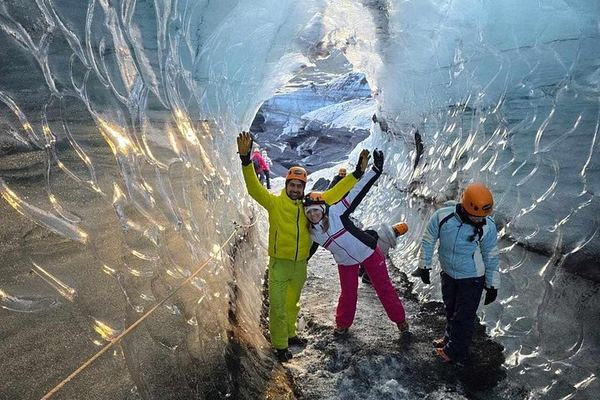
3-Hour Katla Ice Cave Tour From Vík With a Short Ladder Climb
Meet outside the Ice Cave Bistro in Vík for a 3-hour Super Jeep trip to Kötlujökull. Helmets and crampons are provided, and the entrance may need a ladder.
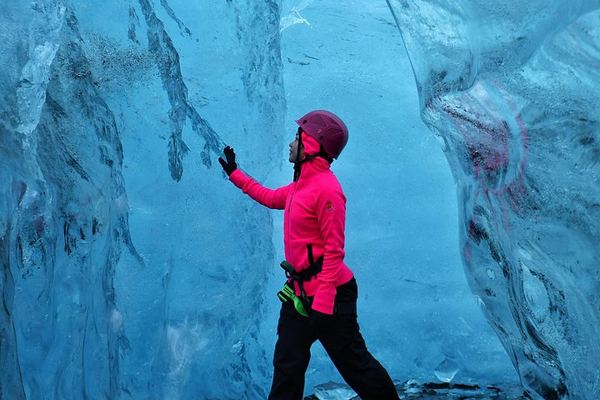
Blue Ice Cave Exploration From Jökulsárlón With Super Jeep, Max 14 Guests
A modified Super Jeep takes a small group of up to 14 from Jökulsárlón to a blue ice cave, with crampons, helmets and a professional guide in the booking.
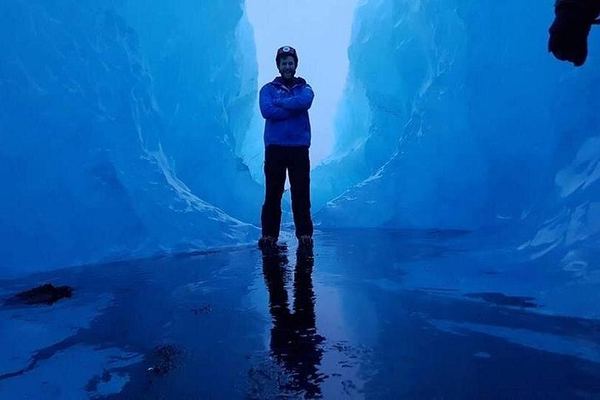
Crystal Blue Ice Cave Super Jeep Adventure, 9:30 and 2 pm Departures
Daily Super Jeep departures at 9:30 am and 2 pm lead from Jökulsárlón to a blue ice cave in Vatnajökull, with a licensed guide. Up to 15 travelers per booking.
Ratings collected by Viator and Tripadvisor
If you book through the links on this site, we earn a commission from the operator at no extra cost to you. We do not rank operators on this page, and the advice above would not change without the commission.
See the ice cave tours that run in Iceland
Twenty listings compared, with the rules the national park set after 2024.
Data verified on . Official pages and notices opened 19 Oct 2026. Eisriesenwelt season and Visit Iceland window are as published that day and change each year. Tunnel facts are the operator's own.