
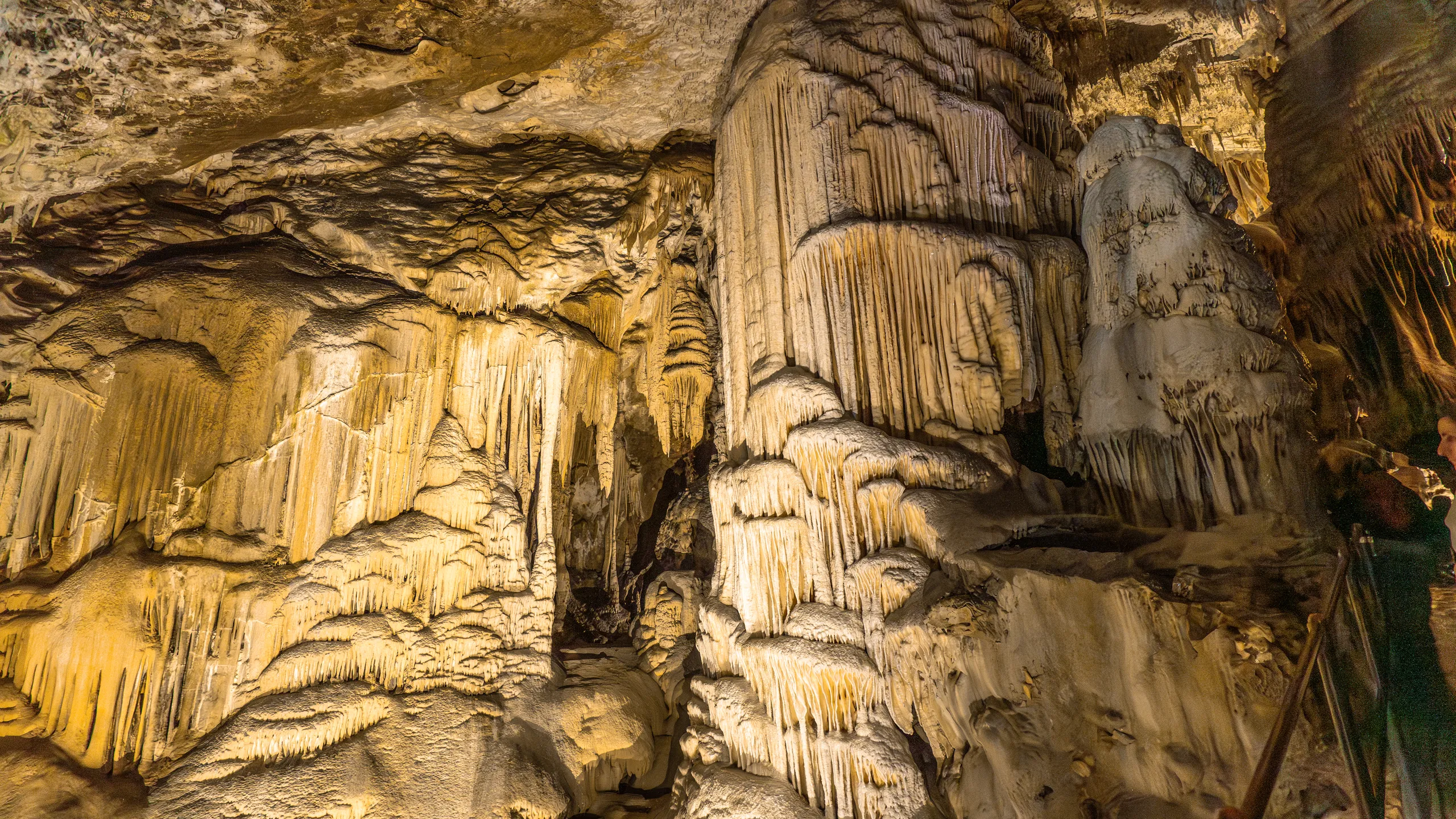
The Blue Grotto on Capri has a door about a metre high, according to the Comune di Anacapri, so visitors lie down in a rowing boat to get under it. At Postojna in Slovenia, the cave's own mobility page describes a concrete path with no steps, apart from one long slope. Both are show caves, and a day at one has almost nothing in common with a day at the other. The country on the ticket does not tell you that. The kind of cave does.
So this page sorts by kind first and by country second. The site sells tours in twelve countries, and each has its own page for departures and listings. What those pages cannot do is tell you if you want a boat, a staircase, a river or a block of ice. That choice comes earlier, and it is cheaper to make at a desk. Below you will find a table that maps each kind of cave to the countries where this site has it, one short section per kind, twelve country cards, and three questions that send you to the right guide. If you want the long definitions, types of cave tours has them. If you are comparing actual departures, how to choose a cave tour puts the decisions in order.
Which kind of cave are you actually choosing?
There are nine kinds on this site, and they fall into five families: walk-in caves, sea caves, water caves, places dug by people, and ice. Within a family the physical demands are close. Across families they are not. A weak swimmer can do all of Paris, Rome and Wieliczka without getting wet and cannot do half of Belize.
| Kind of cave | What the visit is | Where on this site | What can stop it |
|---|---|---|---|
| Show cave on a built path | Walk, or ride a train and then walk, on a lit path | Slovenia (Postojna); New Zealand (Waitomo walk-through tours); Vietnam (Paradise Cave at Phong Nha) | Little: a schedule and a gate |
| Sea cave by boat | Sit or lie in a small boat, or paddle a guided kayak | Croatia (Blue Cave); Italy (Capri); Portugal (Algarve) | Swell and wind; at Benagil, written rules |
| River and boat caves | Sit while someone rows you through grottoes and river passages | Vietnam (Trang An, Tam Coc, Phong Nha); New Zealand (the boat in the Glowworm Caves) | A rising river |
| Swim, tube and wade caves | Be in the water: swim in a cenote, float on a tube, wade through a cave | Mexico (Tulum); Belize (ATM Cave, cave tubing); New Zealand (black water rafting) | Rain upstream; no official closing level found for Belize |
| Catacombs and old quarries | Walk a guided or one-way route underground | France (Paris); Italy (Rome, Naples) | Capacity and booking, not weather |
| Salt mine | Walk a long mine route with a guide | Poland (Wieliczka) | Stairs and your knees |
| Underground city | Stoop through passages cut into soft rock | Turkey (Cappadocia) | Low ceilings and your nerves |
| War tunnels | Crawl or walk through preserved tunnels | Vietnam (Cu Chi) | Tight spaces |
| Glacier ice cave | Walk on ice in helmet and crampons with a guide | Iceland | The ice itself, judged by guides |
The country pages behind the table: Croatia, Italy, Vietnam, Mexico, Portugal, France, Iceland, Belize, Poland, New Zealand, Slovenia and Turkey. Each one lists its tours and the nearby destinations.
Sea caves: why do three countries share one kind of day?
Croatia, Italy and Portugal sell the same product: a small boat, a low door and a few minutes inside. They also share the same weakness. Italy's Ministry of Culture writes that the Blue Grotto stays closed in adverse sea and weather conditions. At Benagil the harbour master's Edital 019/2024 caps a motorized boat at 2 minutes inside the chamber and a kayak group at 8, bans swimming in, and refuses entry when visibility is under 1,000 m. None of the three sources gives a wave height. So the useful planning rule is a spare day, not a month. sea caves compared sets the five caves side by side, and if your cave tour is canceled says who decides on the morning.
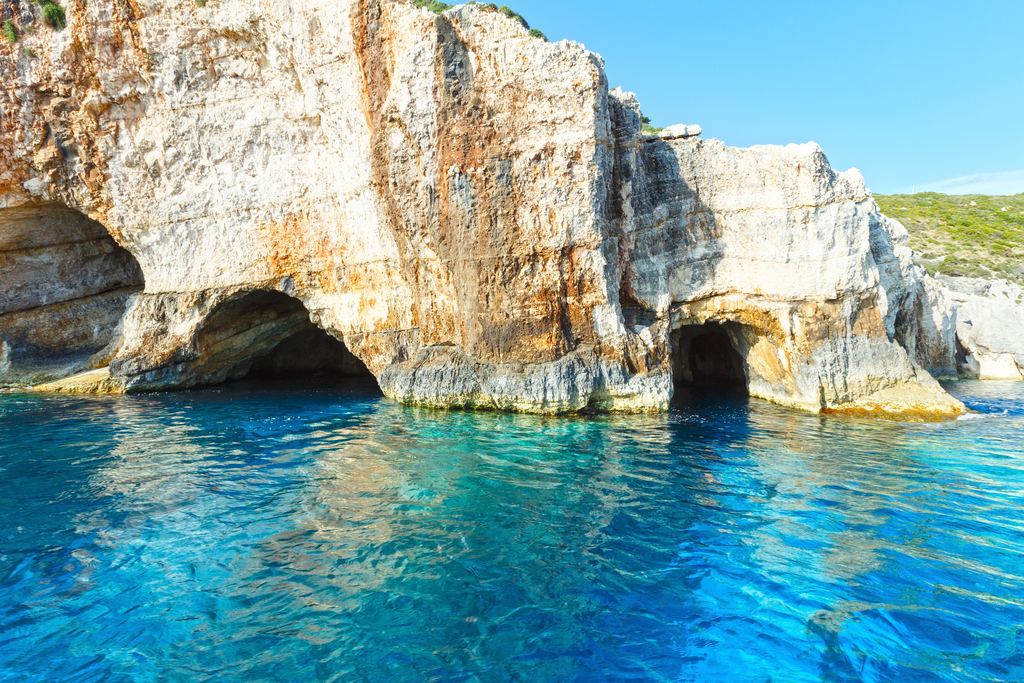
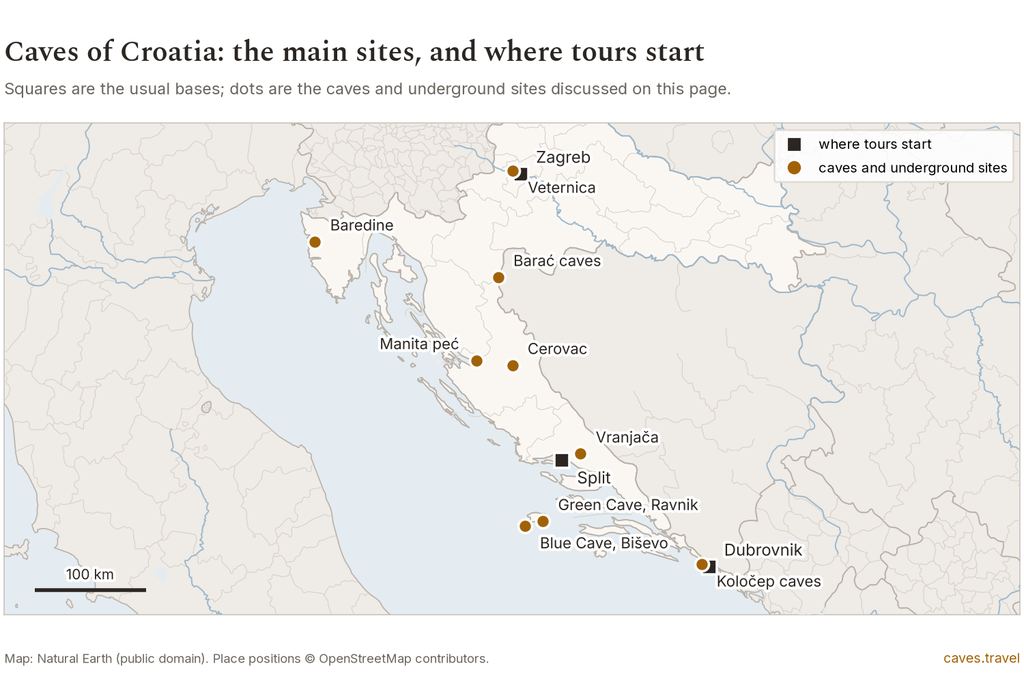
One detail changes the choice inside the family. Tours from Dubrovnik do not go to Biševo, which is 176 km away. They go to a different Blue Cave, so a search for "Blue Cave Croatia" can lead to two very different trips. The pages for the Blue Cave on Biševo, Blue Cave tours from Dubrovnik, Capri and the Algarve keep them apart.
Walk-in show caves: what do you get for having no weather?
A show cave has a path, lamps and a gate, so almost nothing outside can cancel it. Postojna is the clearest example. Its tour page says the standard visit covers about 5 km of a 24 km system, mostly by train, with just over a kilometre on foot, and that the park wants you there 30 minutes early. The same page describes adventure tours into the less visited parts that ask for fitness and caving experience. One cave, two products, and the second is not a longer version of the first. On the Postojna page the listings are the first kind.

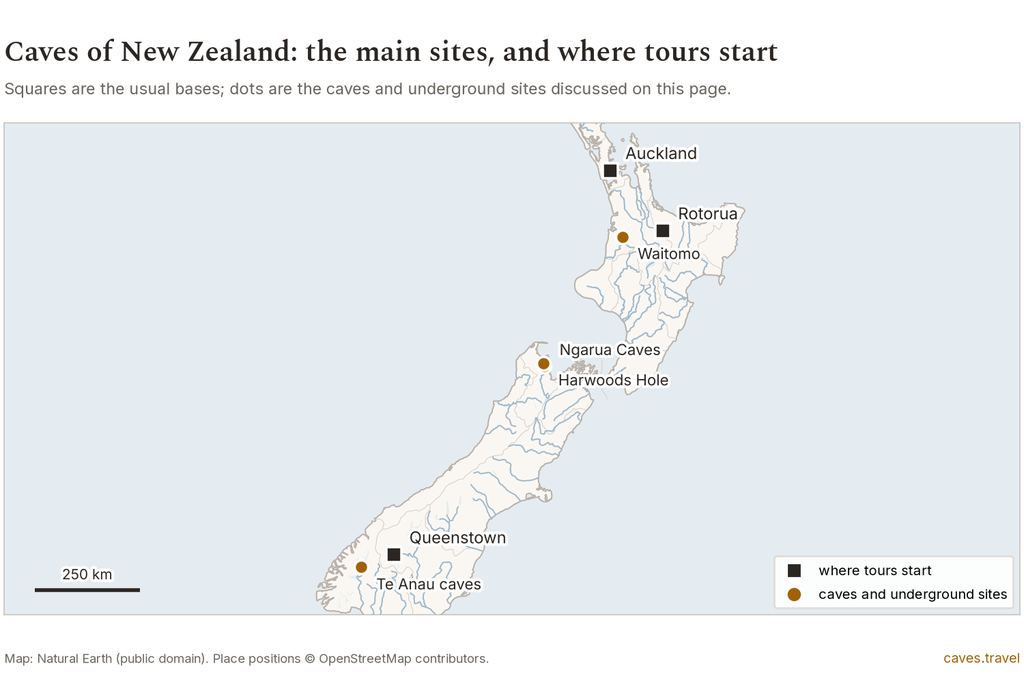
At Waitomo the range sits on one list. The operator's own FAQ gives walk-through tours of 45 minutes to an hour and a half, and black water rafting tours of three and five hours. Photography is not permitted in the Glowworm Caves or on the rafting. That is the Waitomo page. In Vietnam, the Phong Nha park describes Paradise Cave as a 1.6 km path, a 500 m trek and then about 1 km of wooden walkway, which is a different effort from the same word. Check the Phong Nha page for which one a listing means.
Water caves: when does the cave ask you to swim?
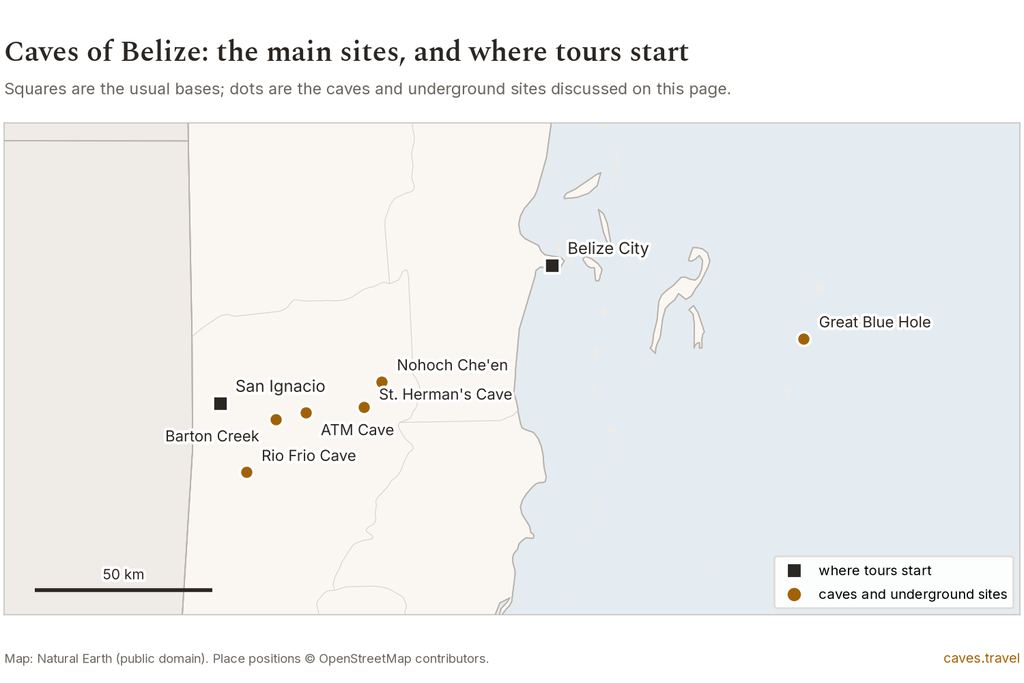
Here the water is the road, the obstacle or the vehicle. Mexico and Belize are where it gets personal. A cenote is a flooded sinkhole, and a 2024 paper in Microbial Ecology describes the Yucatan ones as formed by the collapse of limestone bedrock. Swimming in daylight or under a roof is the whole question, and cenotes explained explains the types. In Belize, the National Institute of Culture and History lists Nohoch Che'en as a cave you navigate on inner tubes, and gives the ATM Cave as 3.13 miles long and used by the Maya from A.D. 300 to 600. Tickets for the ATM Cave are sold only through licensed operators.
Vietnam sits on the gentle end. At Phong Nha the park says a motor boat takes you about 30 minutes up the Son River, then the engine is switched off and the boat is rowed through about 1,200 m of underground river. Nothing about that asks you to swim. The uncomfortable part is elsewhere: on many boat tours a "swim" is a dip in open water beside the cave, not inside it, and at Biševo and Benagil swimming into the cave is forbidden. caves you visit by boat, swimming or tube sorts all of this by how the water carries you.
If a listing says cave and swim, ask how far from daylight the swim goes and who holds the rope.
Places dug by people: what did the digging leave for your legs?

Dug for a reason, and the reason sets the stairs
Nobody dug a catacomb for visitors. The original purpose still sets the width of the corridor and the number of steps. The City of Paris says its route has 131 steps down and 112 up at 14 °C. Wieliczka's information page gives about 800 steps on the tourist route, 380 of them at the very start, and 17 to 18 °C. The Turkish culture ministry says Kaymakli's passages were built low, narrow and sloping, and that only about a tenth of Derinkuyu can be visited.
Rome and Naples sell the same word and ask different things. San Callisto says its visit is not recommended for people with claustrophobia; the San Gennaro catacombs present themselves as accessible. Cu Chi is another thing again, and a Vietnamese state portal says visitors can crawl through its tunnels. Underground cities, catacombs and mines explains why each place exists. The tours are on the pages for Paris, Rome, Naples, Wieliczka, Cappadocia and Cu Chi.
Ice caves: what is the one kind that is never the same twice?
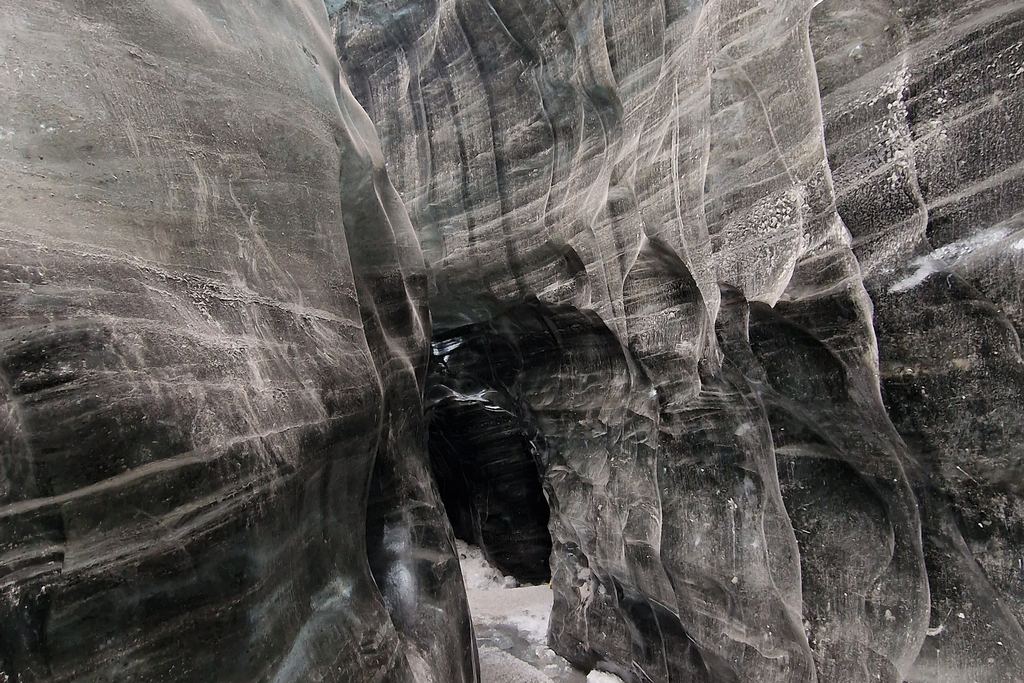
Iceland's glacier caves are carved by meltwater and then judged by people. Vatnajokull National Park's board minutes of 30 September 2024 describe daily assessments by operators and the Association of Mountain Guides in Iceland, and a notice of 26 September 2024 prohibited access to ice caves until the end of October. That is why a listing cannot promise a particular cave, and why the Iceland ice cave tours page is about the guide and not the cave. ice caves: when they exist and why explains the cycle.
Which country has what? Twelve countries, one line each
The twelve countries
Pick the kind of cave first, then open the country that has it.
Croatia
Biševo's Blue Cave, and a different Blue Cave on tours from Dubrovnik.
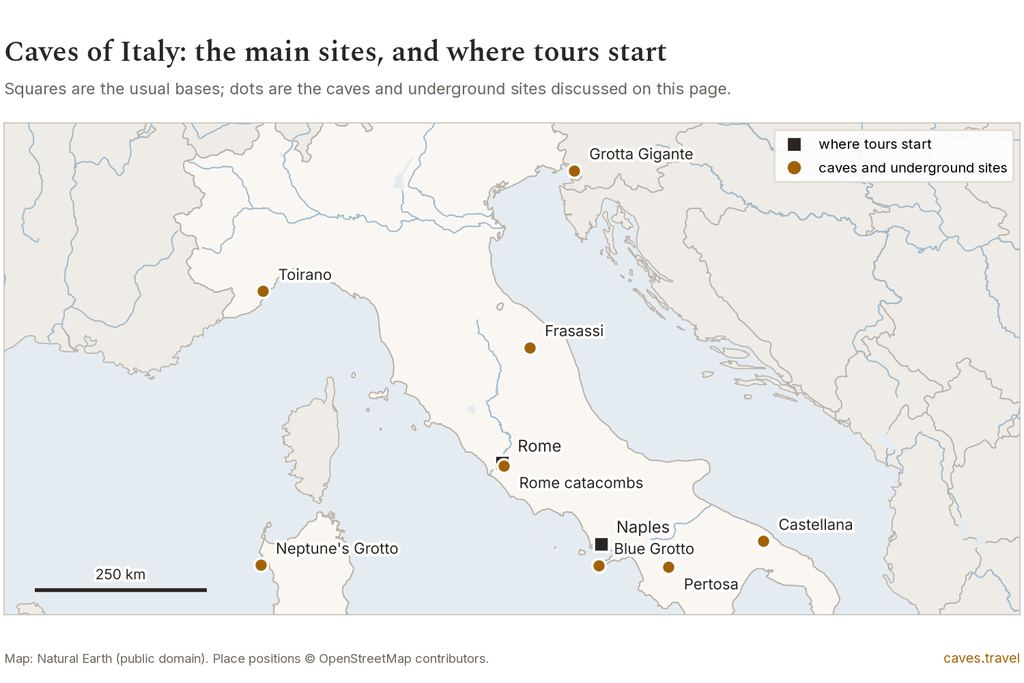
Italy
The Blue Grotto by rowing boat, catacombs in Rome, quarry tunnels in Naples.
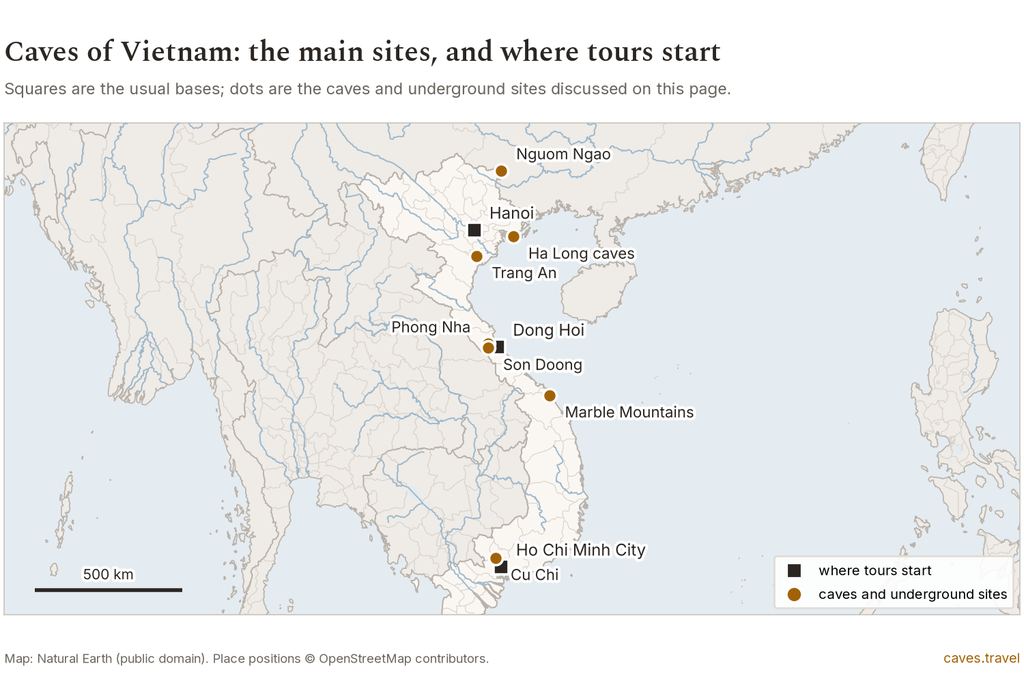
Vietnam
Four kinds in one country: rowed boats, river caves, a walkway cave and the Cu Chi tunnels.
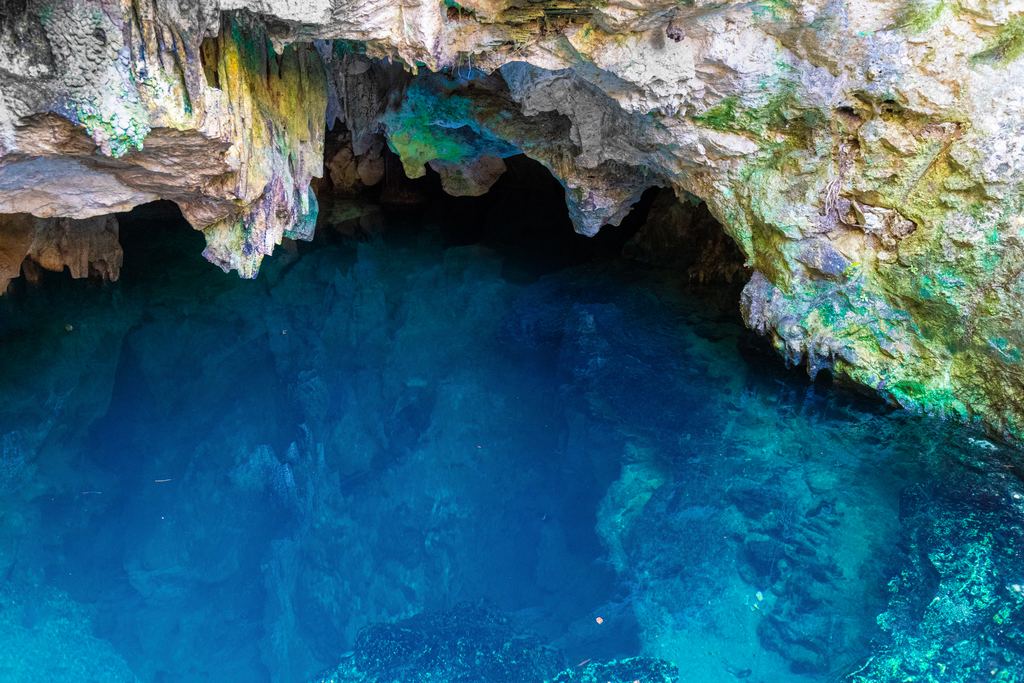
Mexico
Cenotes near Tulum: flooded sinkholes you swim in.

Portugal
Algarve sea caves by boat or kayak, with written rules at Benagil.
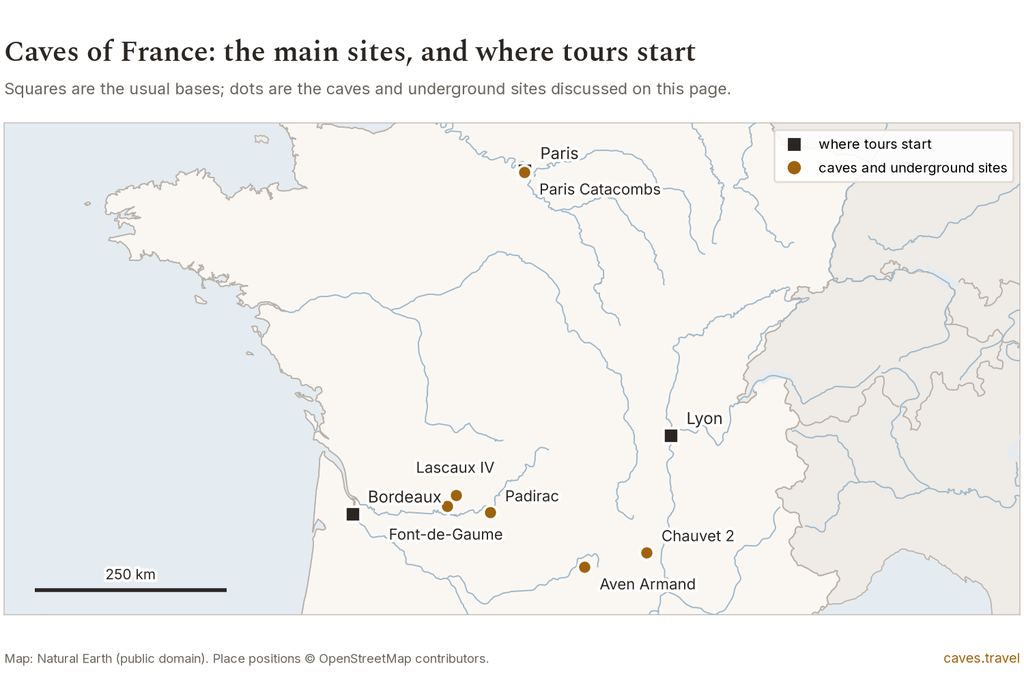
France
The Paris Catacombs: an ossuary in old quarries, 131 steps down.

Iceland
Glacier ice caves, reassessed by guides every day.
Belize
Cave tubing on a river, and the ATM Cave through licensed operators.

Poland
Wieliczka salt mine: about 800 steps on the tourist route.
New Zealand
Waitomo: glowworm caves by boat, black water rafting by tube.

Slovenia
Postojna: a train, a concrete path and no steps but one slope.

Turkey
Cappadocia's underground cities, built low and narrow on purpose.
How long will you really be inside the cave?
Time inside is the question a country page cannot answer, because it varies by kind far more than by place. Benagil allows 2 minutes by motorboat. Postojna's own tour page counts 90 minutes. In Paris the city's practical page says the visit lasts 45 minutes and another page on the same site says to plan on an hour. San Callisto in Rome lists about 30 to 40 minutes, Wieliczka two to three hours. If your trip hinges on a long stretch underground, a mine or a show cave gives it. A sea cave gives you a boat ride and a glimpse. how long a cave tour is turns this into a table, and the pages for Benagil, Postojna, Paris and Wieliczka show what the listings promise.
Who decides whether the cave is open?
Four different parties, depending on the kind. A building manager decides for catacombs, mines and show caves: a schedule, a ticket, a capacity. The sea decides for Capri, Biševo and Benagil. A river decides for the rowed boats and tubes, though for Belize we found no official closing level to quote, so do not trust a blog that gives one. And for ice, the guides decide that morning. This page does not repeat the months. When to visit caves has the climate tables, caves in the rainy season covers the rivers, and if your cave tour is canceled says what to ask when the answer is no. For the boat caves, start at Capri; for the rivers, at the Cayo District.
What can your body and your nerves do?
This is the third filter, and it splits the nine kinds more sharply than the first two. Stairs run from none at Postojna to about 800 at Wieliczka. Water runs from none in Paris to the whole visit in a cenote. Low ceilings run from Capri's one-metre door, entered lying down, to Kaymakli's long stooping passages. The Cave Fit Guide lines up 19 destinations on facts like these, and each cell names its source or says not confirmed. For individual limits, see cave tours for limited mobility, cave tours for claustrophobic visitors, cave tours with kids and what to wear on a cave tour. On the risks, are cave tours safe goes by mechanism, and photography in caves lists the camera rules that vary from site to site.
What does this network not cover?
Less than the word caves suggests. The US National Park Service calls lava tubes probably the second most common kind of cave, and this site sells no lava tube tour. It sells no multi hour crawl into an undeveloped cave either, with the partial exception of the adventure routes some show caves run. The twelve countries are where the catalog has tours, not a ranking of the best caves in the world. A country can also mislead in both directions: France and Mexico each give you one kind, while Vietnam gives you four. If you arrived looking for a particular record cave, check whether we have it before you plan around us.
Want the geology behind the kinds? how caves form explains the formation routes, and Plan Your Cave Trip sets the whole trip in order: where, when, what to bring, ticket or tour. When you have chosen, official ticket or guided tour says when the official site is enough.
Questions people ask before choosing
Choosing where to go
Which country has the most kinds of cave on this site?
Is the Blue Cave in Croatia the same cave from Split and from Dubrovnik?
Which kind of cave is least affected by weather?
Which kind should a first-time visitor choose?
Do I need to swim for a cave tour?
If you book a tour from one of our country pages, caves.travel earns a commission at no extra cost to you. It does not change which kinds of cave are described here, and the table would read the same without it.
Start with the country that has the most kinds
Vietnam puts boats, rivers, walkways and tunnels on one page, which makes it a good place to see how different the kinds are.
Data verified on . Official pages read 19 Oct 2026. Rules, durations and step counts change: check the cave's own site before you go.