
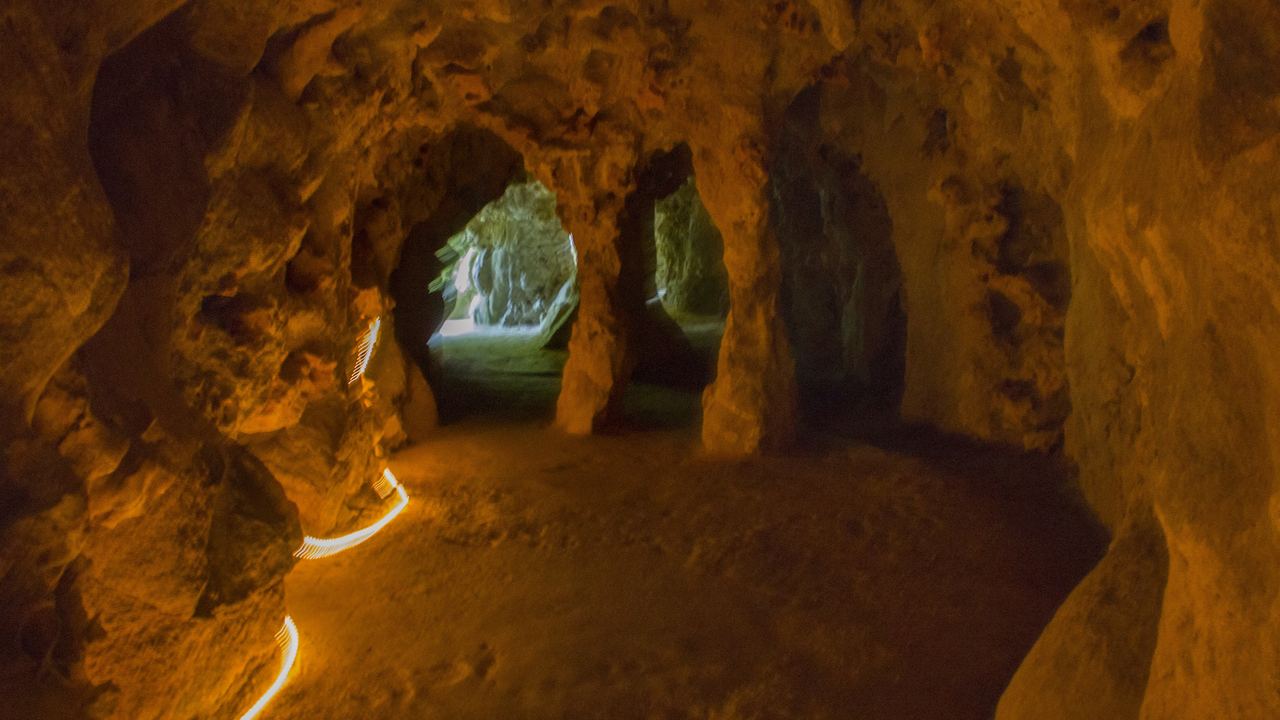
Usually yes, but without flash and without a tripod, and sometimes not at all. The rule belongs to the cave, and in some caves it belongs to the tour: Wind Cave allows flash on its standard walking tours and allows no camera on two others. This page sorts the rules by type, gives the reason each site states, and explains how to get a usable picture of a dark place with the lamps the cave already has.
We read the rules on October 19, 2026, on each cave's own pages. They change, and the guide on the day has the last word.
What do cave sites actually allow?
Six caves and two parks, five kinds of rule. We sorted by the rule and not by the cave, because a visitor needs to know what to leave in the bag, and the name of the cave is only the way to look it up.
| Rule | Allowed at | Not allowed at | Reason the site gives |
|---|---|---|---|
| Any photography | Postojna regular tours, Paris (private use), Wieliczka (private use), Wind Cave standard tours, Waitomo Ruakuri and Aranui caves | Škocjan inside the cave, Waitomo Glowworm Caves and black water rafting, Wind Cave Candlelight and Wild Cave tours | None stated on the pages we read for the bans |
| Flash | Wind Cave standard walking tours | Postojna, Paris | Postojna: preserving the delicate cave environment and safety. Paris: it could disturb other visitors |
| Tripods and selfie sticks | Waitomo Ruakuri, only with prior approval from cave staff | Postojna, Paris, Wind Cave (tripods, monopods and selfie sticks) | Paris: disturbing other visitors. The others do not say |
| Drones | Vatnajökull National Park, recreational use, under general and regional rules | Carlsbad Caverns National Park (interim ban announced August 27, 2014) | Vatnajökull: wildlife protection, safety, visitor experience, pollution control. Carlsbad: impact on the resource and visitors |
| Commercial use | With prior arrangement at Postojna; with a permit for drones at Vatnajökull | Without consent at Wieliczka | Wieliczka: the mine holds copyrighted works and trademarks |
The sources, in order. Postojna says that on regular tours you may take photos and make videos but without a flash or a tripod. Škocjan says that in the interior of the cave taking photos is not allowed. Paris allows photos for private use without tripod or flash. Wieliczka's rules allow photography and filming for private purposes. Wind Cave says flash photography is allowed on standard walking tours, but tripods, monopods and selfie sticks are not, and cameras are not permitted on the Candlelight Tour or the Wild Cave Tour. Waitomo splits it three ways, which we come back to below.
Why do caves ban flash and tripods?
Two sites say why, and the reasons are different. Postojna: the limits exist for the sake of preserving the delicate cave environment and ensuring safety. Paris: a flash or tripod could disturb other visitors. The Paris site also publishes the rule in its visitor leaflet, strictly for your own private use. That is the whole of what the official pages we read explain.
One reason does not appear on any of them. The claim that a camera flash harms glowworms, or switches their light off, circulates in visitor forums. None of the Waitomo pages we read says it. Waitomo's own explanation for its camera ban is "flash-free serenity", under a tip that says to put your camera down and live in the moment. We do not repeat a mechanism that its operator does not claim.

What does the lighting do that your flash does not?
The cave's own lamps do something documented. A 2021 paper in Microorganisms on Lehman Caves in Nevada says that artificial lighting in show caves promotes the growth of biofilm communities called lampenflora: cyanobacteria, algae, diatoms and bryophytes that live on the light. They discolor formations. The park treats the lit areas with a 10% bleach solution about every six months, and the authors say the treatment does not eliminate them.
That does not make a flash harmless, and we found no source that measures what one does. It means that a flash ban is not the whole story of light in a cave. What a visitor can control is the hands. The NPS reminds visitors that skin oils waterproof the formations so they cease growing.
How do you photograph a lit cave without flash?
Use the light that is already there. The showcaves.com guide by Jochen Duckeck says the idea is available light photography: the lamps are placed to look good, so half the work is done, and with available light the humid air does not throw a flash back into the picture, which the guide says leaves no ghosts. Turning the built-in flash off is, in his words, essential. The practical steps from the same guide:
- Set the color balance to the lamp type. Light bulbs sit around 2,700 K and fluorescent lamps between 3,500 and 5,500 K, and without a correction the pictures come out brown or reddish.
- Raise the sensor sensitivity, test it before you go, and expect noise at the highest setting.
- Hold the camera steady. A tripod is usually not allowed, so lean on a handrail, a rock, a wall or a column, and never on a speleothem. A mini tripod pressed against your chest works, and holding your breath for the shot helps.
- Underexpose by about two full steps. Otherwise the picture is bright and blurred and the lamps burn out into white patches.
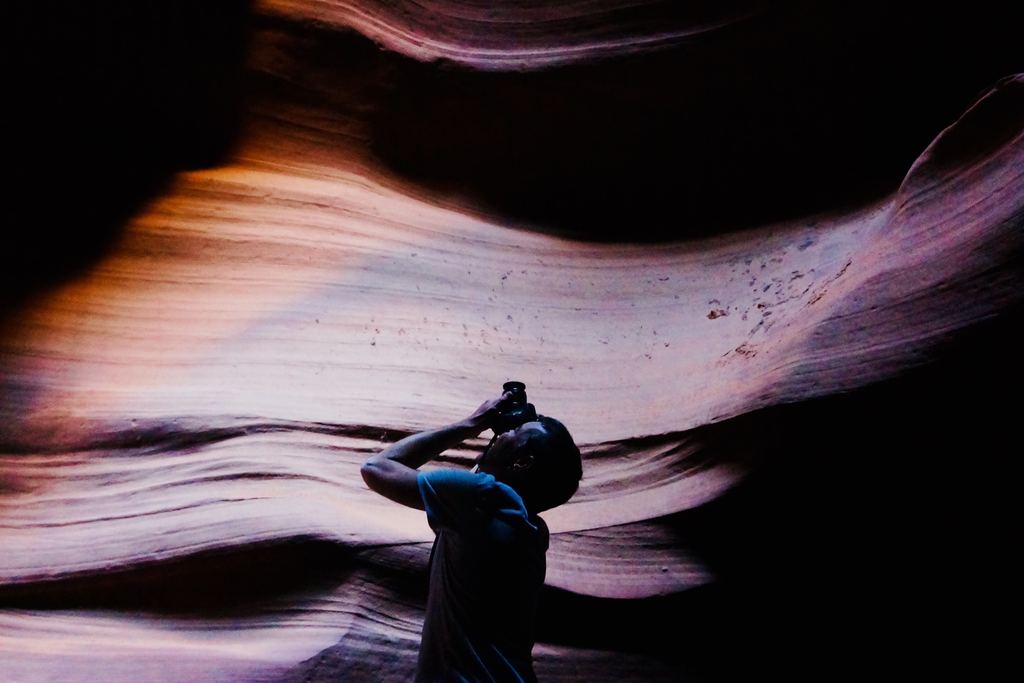
Flash off, camera braced against your chest or a wall, shot taken while holding your breath, exposure two steps under. That is the whole method for a lit show cave.
The guide also says something we like for its honesty: if your camera cannot turn the flash off, it is not sufficient for cave photography. For unlit caves it describes a different method, with a tripod and manual flashes fired by hand, which no show cave allows on a regular tour and which we leave to the specialists. We have no source for phone settings, so we do not give any.
Why does one cave allow photos on one tour and ban them on another?
Because the tour is a different place. At Waitomo, the operator's FAQ says you can take cameras and GoPros on Ruakuri Cave and Aranui Cave tours, while photography is not permitted inside the Waitomo Glowworm Caves and the black water rafting tours. The Ruakuri page adds that photography is encouraged in some areas, that you should respect the no-photography areas, that camera equipment must be compact and contained, and that tripods and other accessories are not allowed without prior approval from cave staff. It also says to ask about its designated photography tours.
One detail sits uneasily. The same operator says no cameras are allowed on the glowworm and rafting tours, and its FAQ says that you can purchase your tour photos after the experience. The site has pages for glowworm cave photos and for rafting photos. We make no claim about why. We note that the ban and the shop exist side by side, and that you are choosing between a picture you take and a picture you buy.
Wind Cave runs the same pattern in a different way: flash is allowed on the standard tours, and cameras are not allowed on the Candlelight and Wild Cave tours, with no reason given on the page. If you plan a trip around photos, the Waitomo and Postojna pages cover the tours, our guide on how to choose a cave tour shows what to check first, and the wildlife page covers glowworms.
Are drones allowed at caves?
It depends on the land the cave sits on, and the two examples we read point in different directions. The National Park Service release of August 27, 2014 says drones are banned from many national parks across the U.S., including Carlsbad Caverns, citing impact on the resource and on visitors. NPS marks that release as not updated, so read it as a date, not a current rule.
Vatnajökull National Park in Iceland, where the glacier ice caves are, says the opposite for recreational flying. Its notice of July 11, 2024 says a special permit is not required for recreational drones in general, that the Icelandic Transport Authority's general rules apply, and that regional restrictions apply at Skaftafellsjökull, Jökulsárlón and Dettifoss. In some places drones are not allowed at all, and in eight areas verbal permission from rangers is required. Commercial work, such as filmmaking or advertising, needs a permit. Neither source is about flying inside a cave, and we found no official page that says it is allowed. Ask the land manager, and see the Iceland ice cave tours page for the tours themselves.
Can you post or sell your photos?
Posting is usually welcome and selling is not. Postojna invites you to share your photos on social media with its hashtags, and says that photographing and filming for commercial or other purposes requires a prior arrangement. Wieliczka's rules allow private filming and ban commercial use of photographs and films without the mine's consent, and they add that the mine contains works protected by copyright and trademarks, and that the mine reserves the right to pursue claims over infringement (visiting rules, 2025 edition, our translation from Polish). Vatnajökull requires a permit for commercial drone work.
If you sell prints or license a picture from a cave, read the rule for that cave before you go. A guide may not mention it, because the rule is in the visiting regulations and not in the briefing.
What do you do when the guide says no?
Put the camera away and ask whether another tour allows it. That is a normal answer at Waitomo, where Ruakuri Cave has a designated photography tour, and the rules differ by tour in several places we read. Respect the no-photography areas inside a tour that otherwise allows photos, because the guide's instruction applies to a spot and not to the whole visit. A cave is a group experience in the dark, and a lit phone screen is a small light in a dark room. Our guides on what to wear and whether cave tours are safe cover the other things to settle before you go, and Plan Your Cave Trip lists the rest.
Quick answers
Can I use my phone's flash in a cave?
Treat it as a flash. Postojna and Paris both rule out flash, and Postojna's reason is the cave environment and safety. If you want light, use the cave's own.
Are GoPros allowed?
Waitomo's FAQ says you can take cameras and GoPros on its Ruakuri Cave and Aranui Cave tours, and not on the Glowworm Caves or black water rafting tours. Other sites may differ, so ask.
Why are my cave photos orange or brown?
The showcaves.com guide says caves lit with electric light generally use light bulbs, and that pictures taken under them without a color balance setting come out brown or reddish. Set the camera to the lamp type, or correct it afterward.
Can I bring a tripod?
Almost nowhere we looked. Postojna, Paris and Wind Cave ban tripods, and Ruakuri Cave allows one only with prior approval from cave staff.
Some tours listed on this site can be booked through partner platforms. If you book from here, the site earns a commission at no extra cost to you. The photography rules above come from the caves' own sites, not from those listings, so check the cave's page or the booking details before you pack a camera.
Waitomo glowworm cave tours
Where the camera rule changes from one tour to the next.
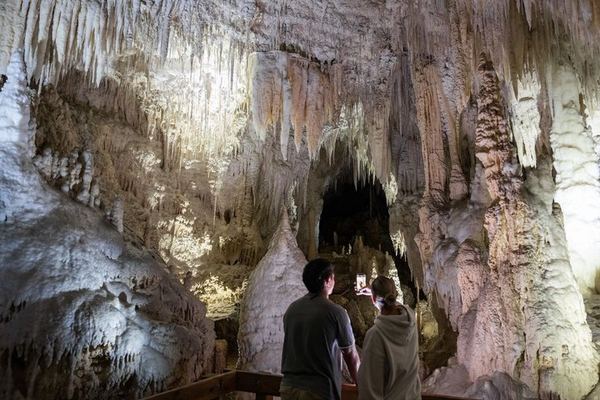
Aranui Cave 1-Hour Guided Tour With Bush Walk in Waitomo
Visit Aranui Cave, the smallest and most delicate of Waitomo's three main caves: a one-hour guided walk plus a short bush walk, with seven daily departures.
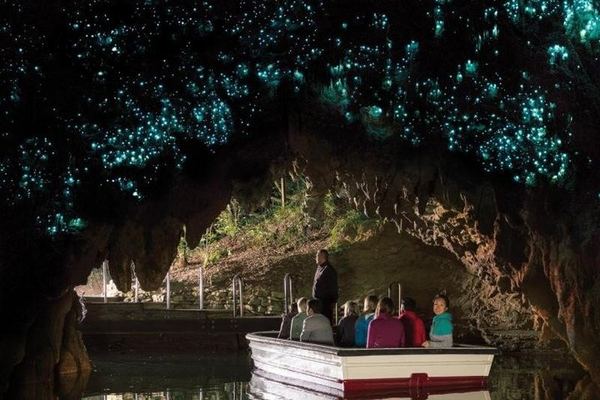
Auckland to Waitomo Glowworm Caves Day Trip With Boat Ride and Pickup
Shared day trip to the Waitomo Glowworm Caves with hotel pickup, all entry tickets and a one-hour guided tour with a boat ride. Lunch is paid separately.
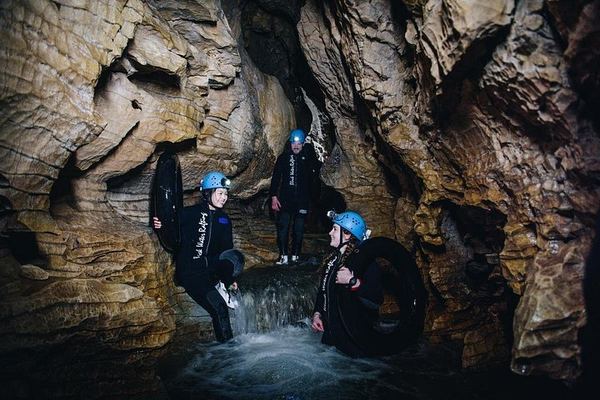
Black Abyss Abseil and Zipline Caving Private Tour From Auckland
The five-hour Black Abyss in Ruakuri Cave with a private minibus from Auckland: abseil, zipline, tubing and a cafe-style lunch. Travelers must be 16 or older.
Ratings collected by Viator and Tripadvisor
Check the camera rule before you pack
The rule on the day is the rule of the cave and the tour you booked.
Data verified on . Rules read on each site on this date. Camera, tripod and drone rules change: check the cave's own page before you go.